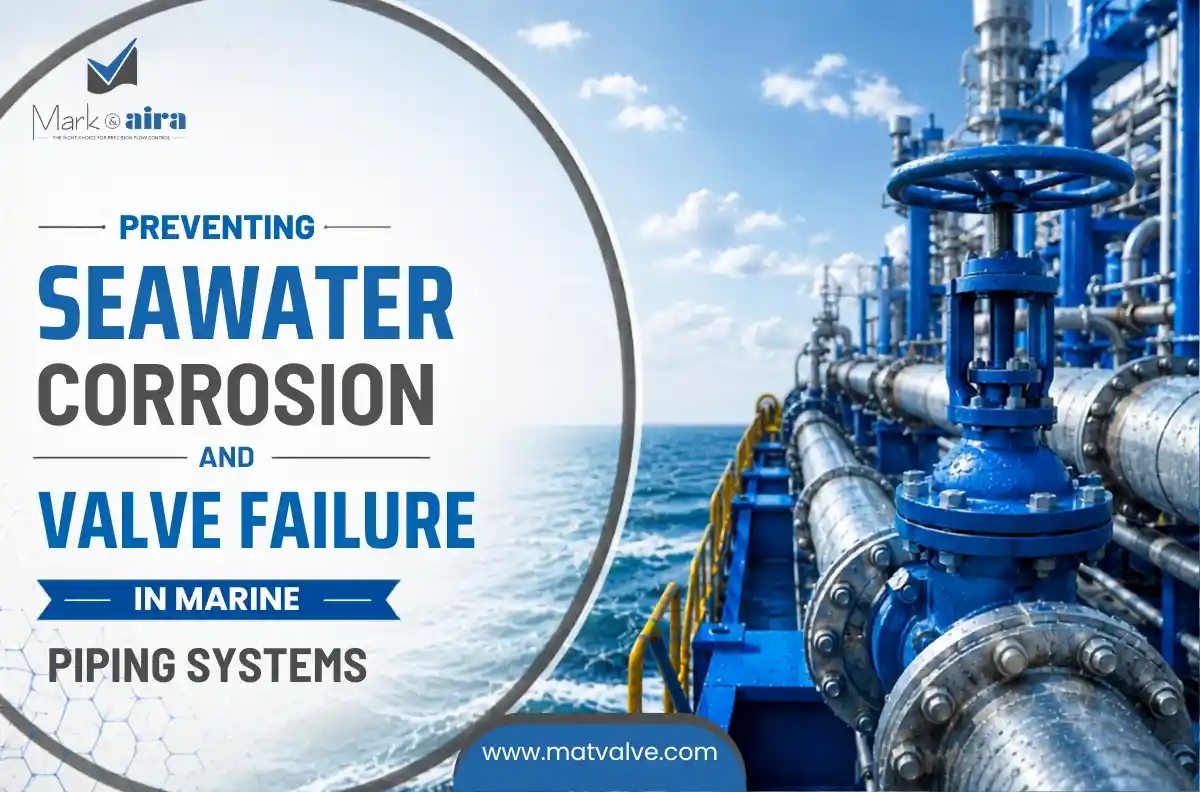
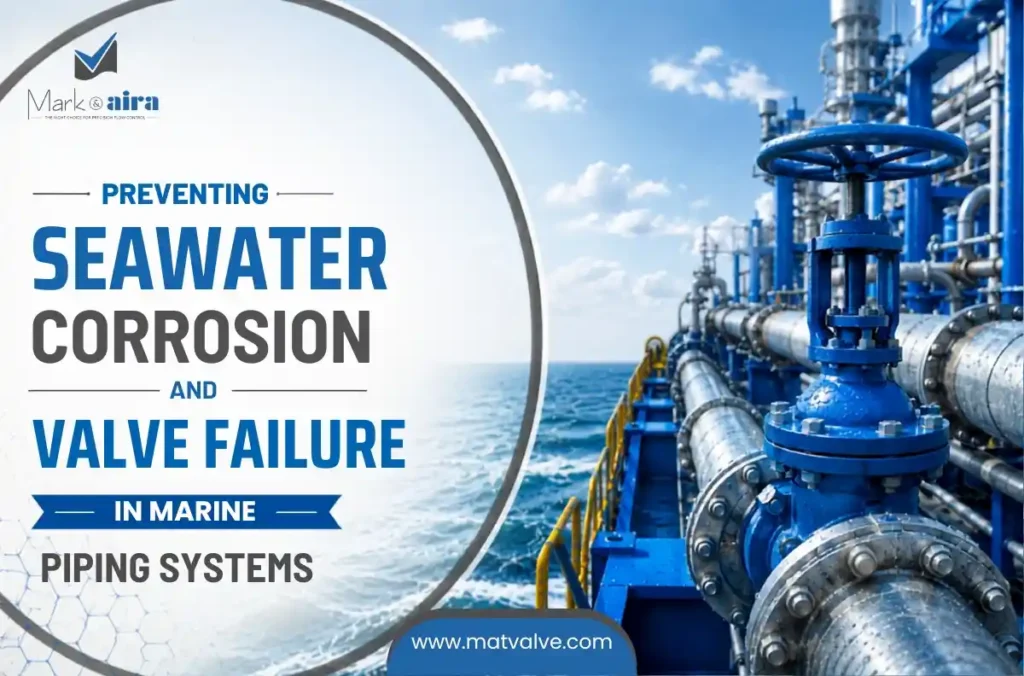
Marine piping systems operate in an environment where corrosion is not an occasional maintenance problem – it is a continuous engineering consideration.
Seawater is used or encountered across cooling systems, ballast systems, firefighting lines, seawater intake systems, offshore utilities, and other shipboard services. Valves installed in these systems can remain exposed to chloride-rich seawater for extended periods while also experiencing changing temperatures, flow velocities, pressure conditions, and periods of stagnant service.
These conditions can gradually attack valve bodies, stems, seats, fasteners, flanges, and other wetted components. The result may be increasing operating resistance, deterioration of sealing surfaces, internal or external leakage, and eventually premature valve failure.
For marine operators, preventing marine valve corrosion therefore begins much earlier than routine maintenance. Material selection, valve design, installation practices, flow conditions, and inspection strategy all influence how reliably a valve performs throughout its service life.
This article examines why seawater is particularly aggressive to marine piping equipment, the corrosion mechanisms engineers should watch for, and practical measures that can reduce premature valve deterioration.
Marine valves can corrode because seawater contains high concentrations of chlorides and dissolved salts that create an aggressive environment for many metallic materials. Depending on material grade, temperature, flow conditions, oxygen availability, deposits, and valve geometry, seawater exposure can contribute to pitting, crevice corrosion, galvanic corrosion, and erosion-corrosion. Reliable seawater valve performance therefore requires appropriate material selection, compatible components, correct installation, and inspection focused on areas where localized corrosion can develop.
Why Is Seawater So Aggressive to Marine Piping Equipment?
The challenge with seawater is that corrosion behaviour cannot be predicted simply by asking whether a material is “corrosion resistant.”
Actual performance depends on the relationship between the material and its operating environment.
Important factors include:
- Chloride concentration
- Temperature
- Dissolved oxygen
- Flow velocity
- Stagnant versus continuously flowing conditions
- Deposits and marine growth
- Contact between dissimilar metals
These factors can also interact.
For example, deposits accumulating around a valve seat or flange connection can create localized conditions different from those in the freely flowing seawater. Similarly, high flow velocity may increase mechanical attack on surfaces already affected by corrosion.
This is why marine engineers need to evaluate the actual service environment, rather than relying solely on a generic material designation.
Where Does Corrosion Commonly Develop Around Marine Valves?
| Valve Area | Potential Concern |
|---|---|
| Internal body surfaces | General or localized corrosion |
| Seat and sealing areas | Deposits, localized attack and sealing deterioration |
| Stem | Corrosion that may increase operating resistance (a key factor to address to prevent valve seizure) |
| Body/bonnet joints | Crevice conditions and external leakage risk |
| Flanged connections | Crevice corrosion around gasketed areas |
| Dissimilar metal connections | Potential galvanic corrosion |
Four Corrosion Mechanisms Marine Engineers Should Watch
1. Pitting Corrosion
Pitting produces highly localized attack rather than uniform material loss.
This makes it particularly concerning because a component may appear generally sound while small areas experience much deeper penetration.
Chloride-containing environments can increase pitting susceptibility in certain materials, making material grade and operating conditions important considerations for seawater service.
2. Crevice Corrosion
Narrow gaps can create localized environments where seawater becomes trapped and chemistry differs from the surrounding bulk fluid.
Potential locations include:
- Gasket interfaces
- Flange connections
- Fastener areas
- Deposits
- Valve assembly joints
These locations deserve particular attention during planned inspections.
3. Galvanic Corrosion
Marine piping assemblies frequently contain multiple metallic materials.
When sufficiently dissimilar metals are electrically connected in an electrolyte such as seawater, galvanic interaction can accelerate corrosion of the less noble material.
This means engineers should evaluate the complete material combination, not just the valve body’s material.
4. Erosion-Corrosion
Flow conditions also influence valve life.
High-velocity seawater, turbulence, suspended particles, or local flow disturbances can mechanically damage protective surface films and accelerate material loss in susceptible systems.
Valve geometry and operating conditions therefore matter alongside corrosion resistance.
Engineering Insight: In marine service, premature valve deterioration is rarely explained by seawater exposure alone. Material grade, chloride environment, flow conditions, deposits, component geometry, and material combinations determine where and how quickly corrosion develops.
Why "Stainless Steel" Is Not a Complete Material Specification
A common procurement mistake is specifying simply “stainless steel” for seawater service.
Different stainless-steel grades can behave very differently in chloride-containing environments. Suitability depends on the particular grade and the severity of the application.
Instead of specifying material by broad family alone, engineers should evaluate:
| Parameter | Why It Matters |
|---|---|
| Exact material grade | Determines relevant corrosion resistance and mechanical properties |
| Seawater exposure | Defines the actual corrosive environment |
| Temperature | Can significantly influence corrosion behaviour |
| Flow conditions | Affect erosion and deposit formation |
| Dissimilar materials | May introduce galvanic interaction |
| Service criticality | Determines acceptable reliability and inspection requirements |
For demanding seawater applications, project engineers may evaluate higher-alloy stainless steels, duplex or super duplex grades, copper-based alloys, nickel alloys, suitable coatings, or other materials depending on the service conditions and project requirements.
The correct question for procurement is therefore not:
“Is this a stainless-steel valve?”
It is:
“Is the specified valve material suitable for this particular seawater environment and operating duty?”
That single change in procurement thinking can prevent many avoidable material-selection problems in marine piping systems.
How Marine Operators Can Reduce Premature Valve Corrosion
Corrosion cannot be completely removed from seawater service, but its rate and operational impact can be controlled. The strongest approach combines appropriate material selection with good installation, operating practices, and planned inspection.
Match Materials to the Actual Seawater Service
Proper industrial valve selection should reflect the complete operating environment rather than a generic requirement for “marine service.” Engineers should consider:
- Continuous or intermittent seawater exposure
- Operating temperature and pressure
- Flow velocity
- Presence of suspended solids
- Stagnant operating periods
- Material combinations within the piping system
- Expected equipment life
More corrosion-resistant materials are not automatically the best choice for every application. Material performance, mechanical requirements, availability, maintainability, and lifecycle cost should be evaluated together.
Pay Attention to Dissimilar Metals
A valve rarely operates independently. It connects to piping, fasteners, flanges, actuators, instruments, and other equipment that may use different materials.
In seawater, incompatible metallic combinations can create conditions for galvanic corrosion.
Engineers should therefore review the complete assembly and, where necessary, use appropriate material combinations, electrical isolation, protective systems, or other engineering controls specified for the installation.
Control Deposits and Stagnant Conditions
Sediment, marine growth, and other deposits can create localized conditions that promote corrosion around valve internals and sealing areas.
Routine system inspection and cleaning can help identify:
- Deposits around sealing surfaces
- Restricted flow areas
- Marine growth
- Corrosion beneath deposits
- Early deterioration around joints
Valves that remain inactive for long periods may also require additional attention because stagnant seawater can create different corrosion conditions from continuously flowing systems.
Inspection and Maintenance: Look Beyond External Rust
Visible external corrosion is useful to identify, but it does not provide a complete picture of valve condition.
Marine maintenance programmes should pay particular attention to locations where localized corrosion can affect containment or operation.
| Inspection Area | What to Check |
|---|---|
| Valve body | Localized corrosion, coating damage or material loss |
| Stem | Corrosion, deposits and increased operating resistance |
| Seat area | Deposits and deterioration affecting isolation |
| Flanges and joints | Crevice attack or signs of leakage |
| Fasteners | Corrosion and loss of mechanical integrity |
| Valve operation | Changes in torque, movement or response |
Inspection frequency should reflect service severity, valve criticality, material selection, operating history, and vessel or facility maintenance requirements.
A trend is often more valuable than a single observation. For example, steadily increasing operating torque may indicate developing deposits or internal deterioration even before external leakage becomes visible.
Procurement Checklist for Seawater-Service Valves
Procurement teams can reduce future maintenance problems by addressing corrosion risk during specification rather than after installation.
Before approving a valve for seawater service, verify:
- Exact valve material and trim selection
- Compatibility of wetted components
- Pressure and temperature suitability
- Expected seawater exposure
- Seat and sealing material suitability
- Compatibility with connected piping materials
- Required coating or surface protection
- Material certificates and traceability where specified
- Maintenance and spare-parts requirements
For critical marine systems, purchase price should not be the only comparison point. A lower-cost valve that requires frequent maintenance or premature replacement can create a substantially higher lifecycle cost.
Key Takeaways
Seawater corrosion should be treated as an engineering and lifecycle issue rather than simply a maintenance problem.
Pitting, crevice corrosion, galvanic interaction, and erosion-corrosion can affect marine valves differently depending on their location and operating environment.
Reliable valve performance therefore depends on selecting suitable material grades, considering the complete piping assembly, controlling deposits, and inspecting vulnerable areas before deterioration affects operation or containment.
Most importantly, specifying only “stainless steel” or “marine-grade valve” provides insufficient information for demanding seawater applications. The specification should reflect the actual service conditions.
Supporting Marine and Seawater Applications
As a leading industrial valve supplier in UAE, Mark & Aira Trading supports marine, shipbuilding, offshore, and industrial projects across the UAE and Middle East with valve solutions for demanding piping applications.
For seawater systems, our team can assist engineers, EPC contractors, and procurement professionals in evaluating valve materials, pressure and temperature requirements, actuation needs, and application-specific specifications. The objective is to match the valve configuration to the actual service environment rather than selecting equipment based only on size and pressure class.
Selecting valves for seawater service requires careful consideration of materials, corrosion exposure, operating conditions, and lifecycle requirements.
Contact Mark & Aira Trading to discuss valve selection and technical requirements for marine valves in UAE, offshore, shipbuilding, and seawater piping projects across the UAE and Middle East.