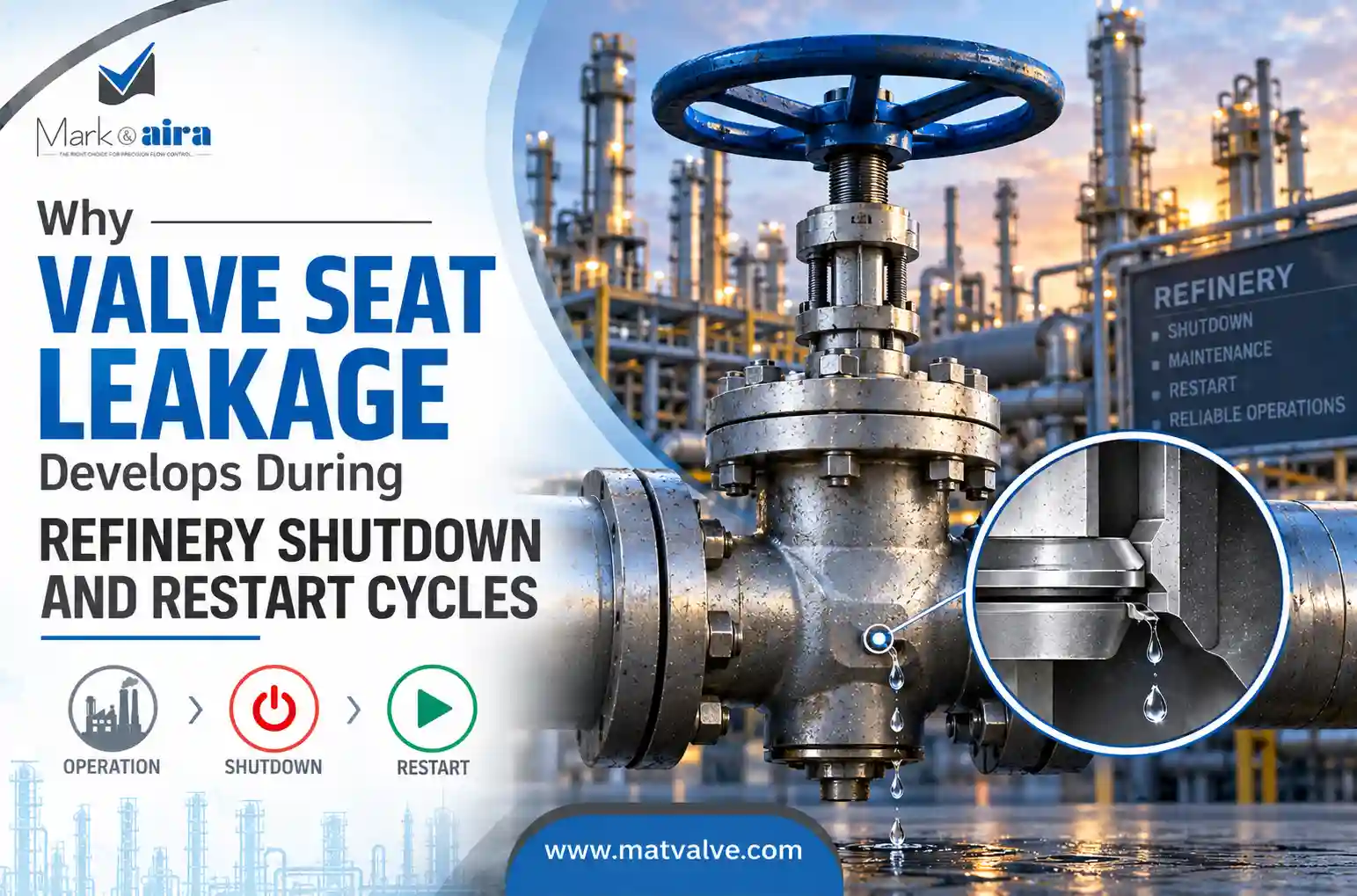
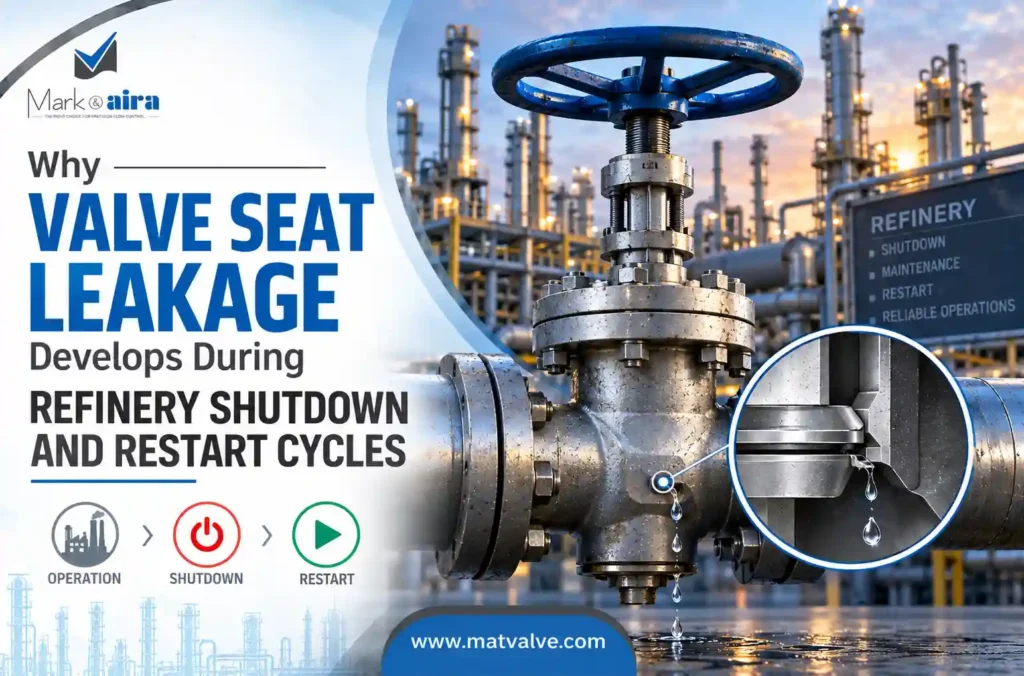
A refinery valve may operate reliably for months but begin leaking after a planned shutdown or shortly after the unit returns to service.
This does not always mean the shutdown suddenly damaged the valve. Shutdown and restart expose valves to changing temperatures, pressure loss, deposits, debris movement and cycling after long periods in one position. These conditions can reveal deterioration that was already developing during normal operation.
For refinery maintenance teams, the important question is therefore not simply “Why is the seat leaking?” but “What changed between normal operation, shutdown, and restart?”
Why Can Valve Seats Leak After a Refinery Restart?
Valve seat leakage after shutdown can develop when thermal cycling changes sealing conditions, process deposits interfere with the seat, debris damages sealing surfaces, or increased operating resistance prevents complete closure.
In some cases, shutdown only exposes an existing problem. A valve that remained fully open for months may not reveal seat deterioration until it is required to provide tight isolation.
Understanding this distinction helps maintenance teams correct the root cause instead of repeatedly replacing seats.
1. Thermal Cycling Changes Valve Clearances
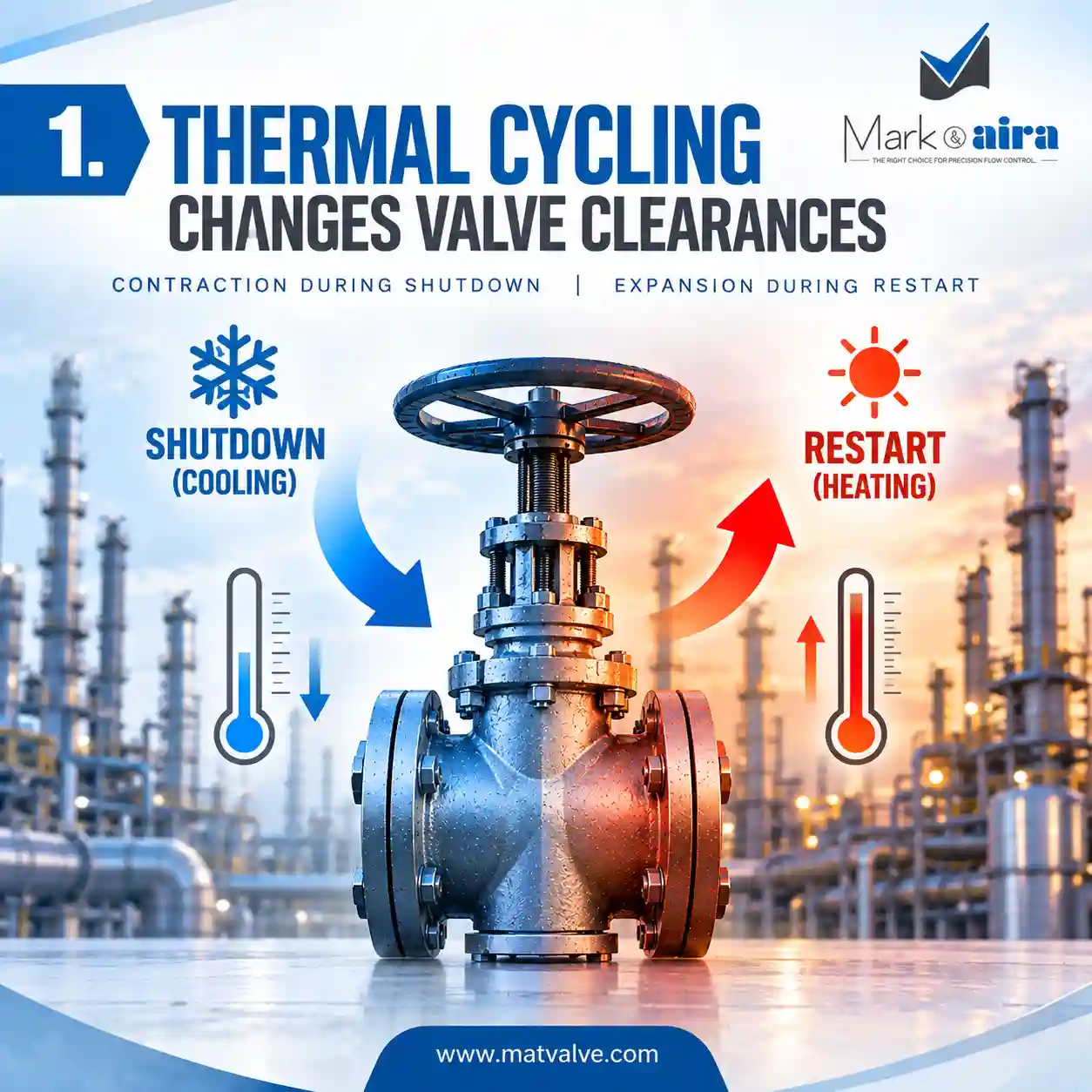
Refinery processes can involve substantial temperature differences between operation and shutdown.
When equipment cools, the valve body, stem, seats, closure element and connected piping contract. During restart, these components expand again. Because different components and materials do not necessarily respond identically, temperature changes can affect:
- Seat contact
- Internal clearances
- Stem alignment
- Packing behaviour
- Sealing load
This becomes particularly important in services experiencing frequent or severe temperature cycles.
A valve that seals correctly when cold may therefore behave differently once the process returns to operating temperature.
2. Deposits Can Prevent Complete Seat Contact
Many refinery process streams contain contaminants or materials capable of producing deposits.
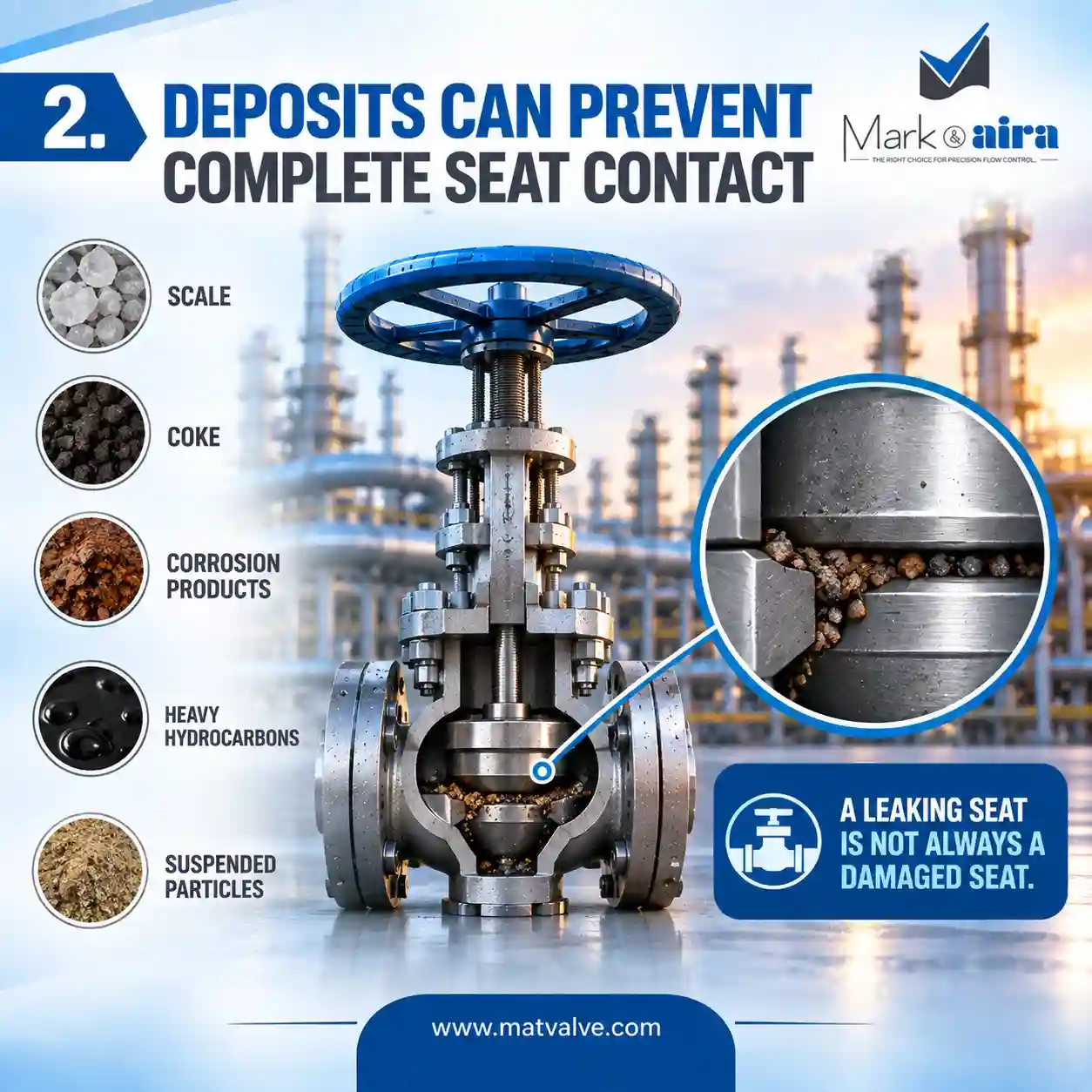
Depending on the service, valves may encounter scale, coke, corrosion products, heavy hydrocarbons, or suspended particles.
When flow stops during shutdown, these materials can settle around valve internals. If deposits become trapped between sealing surfaces, the valve may reach what appears to be its closed position without achieving complete seat contact.
This creates an important maintenance distinction:
A leaking seat is not always a damaged seat.
Inspection should determine whether the problem is physical seat damage or simply material interfering with proper closure.
3. Restart Can Move Debris Through the Valve
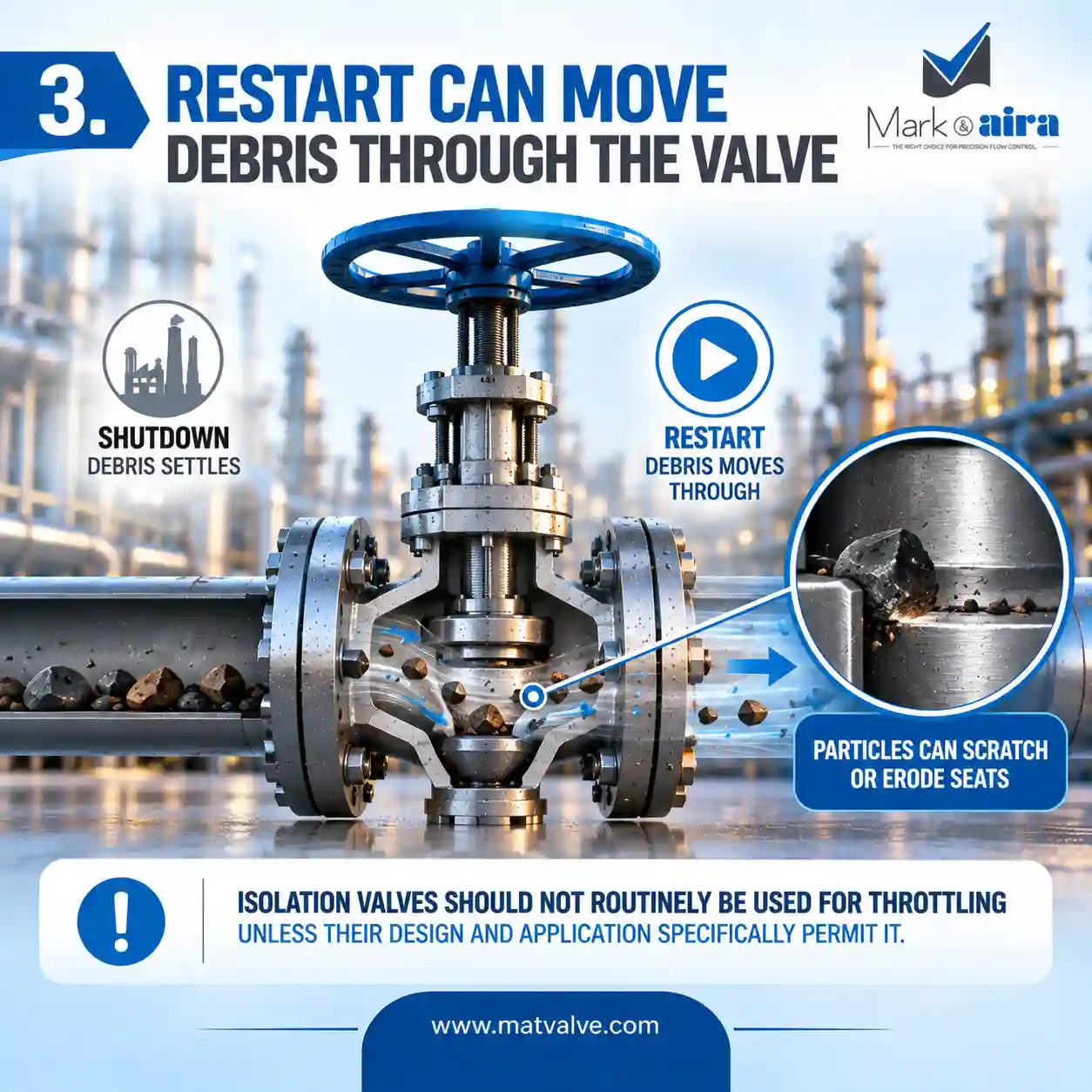
When circulation resumes, accumulated debris can move through the piping system.
Particles passing across a partially open valve may scratch or erode sealing surfaces, particularly where velocity increases through restricted flow areas.
Existing minor seat damage can then become more significant.
This is one reason isolation valves should not routinely be used for throttling unless their design and application specifically permit it.
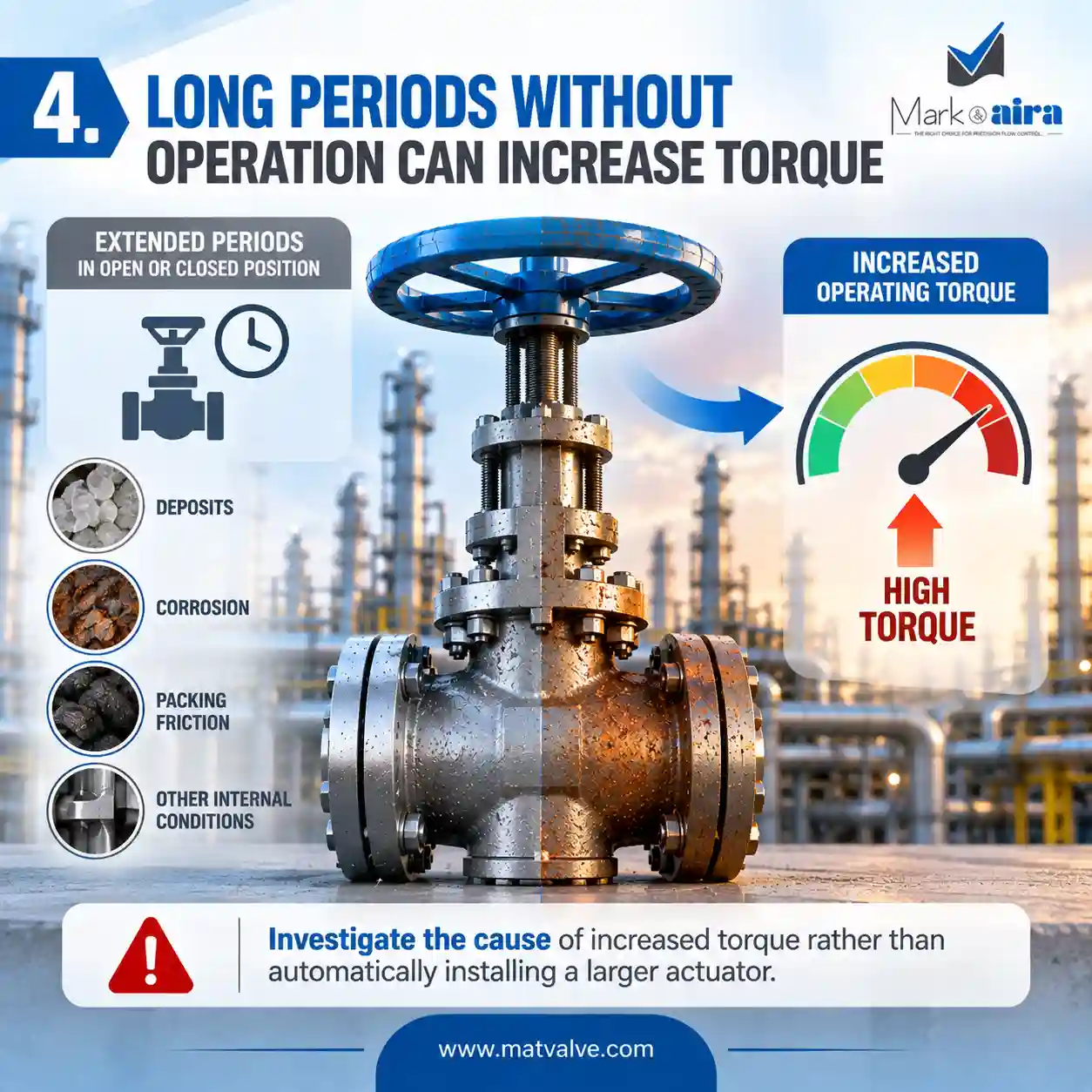
4. Long Periods Without Operation Can Increase Torque
Some refinery isolation valves remain fully open or closed for extended periods.
Deposits, corrosion, packing friction or other internal conditions may gradually increase operating resistance. The problem becomes noticeable only when the valve is operated during shutdown.
An abnormal increase in valve torque should therefore be investigated rather than automatically solved by installing a larger actuator.
Increasing actuator output without understanding the resistance can place additional mechanical load on the valve while leaving the underlying problem unresolved.
Diagnosing Leakage After Restart
Maintenance teams should compare the leakage with the valve’s previous operating history.
| Observation | Possible Area to Investigate |
|---|---|
| Leakage begins after restart | Thermal effects, debris or seating interference |
| Operating torque increases | Deposits, friction or internal interference |
| Seat is scratched/scored | Debris or erosion |
| Leakage changes with temperature | Temperature-dependent sealing behaviour |
| Valve does not fully close | Deposits, actuator travel or mechanical restriction |
| Leakage repeatedly returns | Selection or service-condition problem |
These observations do not confirm the root cause individually, but they provide a more useful starting point than replacing sealing components immediately.
Use the Shutdown as an Inspection Opportunity
A planned turnaround provides access to valves that may be difficult to inspect during normal refinery operation.
Priority should be given to valves with previous leakage, abnormal torque, severe thermal cycling, contaminated service or critical isolation duties.
Maintenance teams should check sealing surfaces, deposits, stem condition, full valve travel and actuator operation. Where valves have been repaired or sealing components replaced, appropriate pressure and leakage testing should be completed according to applicable procedures and project requirements.
Recording changes in torque, leakage and seat condition across successive shutdowns can also reveal deterioration trends.
Valve Selection Can Reduce Repeat Failures
Repeated seat leakage sometimes originates with the original specification.
Selecting a refinery valve based mainly on size, pressure class and body material may overlook conditions that directly affect sealing reliability.
Engineering and procurement teams should also consider:
| Selection Factor | Why It Matters |
|---|---|
| Process media | Material and sealing compatibility |
| Temperature range | Thermal cycling behaviour |
| Deposits/solids | Potential seat interference and wear |
| Shut-off requirement | Required isolation performance |
| Seat and trim | Wear and sealing reliability |
| Operating torque | Correct actuator sizing |
| Testing | Verification of specified performance |
A valve handling relatively clean hydrocarbon service may require a different configuration from one exposed to heavy residue or particulate contamination—even when line size and pressure class are identical.
Preventing Leakage During Future Shutdowns
The objective should be to prevent the same failure from returning at every turnaround.
That requires combining appropriate valve selection with service-based inspection. Valves with a history of leakage or increasing torque should receive greater attention than non-critical valves operating in less demanding conditions.
If the same valve repeatedly develops leakage after restart, maintenance teams should ask whether the valve design, seat/trim material, actuator sizing, operating practice or maintenance strategy is suitable for the service rather than repeatedly replacing the same components.
Supporting Refinery Valve Requirements in the UAE
Mark & Aira Trading supports refinery, petrochemical, oil & gas and EPC projects across the UAE and Middle East with industrial valve and automation solutions.
For shutdown replacements and new projects, valve selection can be evaluated against the actual process media, pressure, temperature, isolation requirement, materials and actuation conditions.
If a refinery valve has a history of repeated leakage or difficult operation, contact Mark & Aira Trading to discuss the application before selecting a replacement.
FAQs
Why does a valve leak after a refinery shutdown?
Thermal cycling, deposits, debris, seat deterioration or incomplete closure can cause or expose leakage when a valve returns to service.
Can deposits cause valve seat leakage?
Yes. Deposits trapped around sealing surfaces can prevent complete seat contact even when the seat itself is not permanently damaged.
Can thermal cycling affect valve sealing?
Yes. Heating and cooling change component dimensions and can influence seat contact, clearances and sealing behaviour.
Should a larger actuator be used when valve torque increases?
Not automatically. Increased torque can indicate deposits, corrosion, friction or internal interference that should first be investigated.