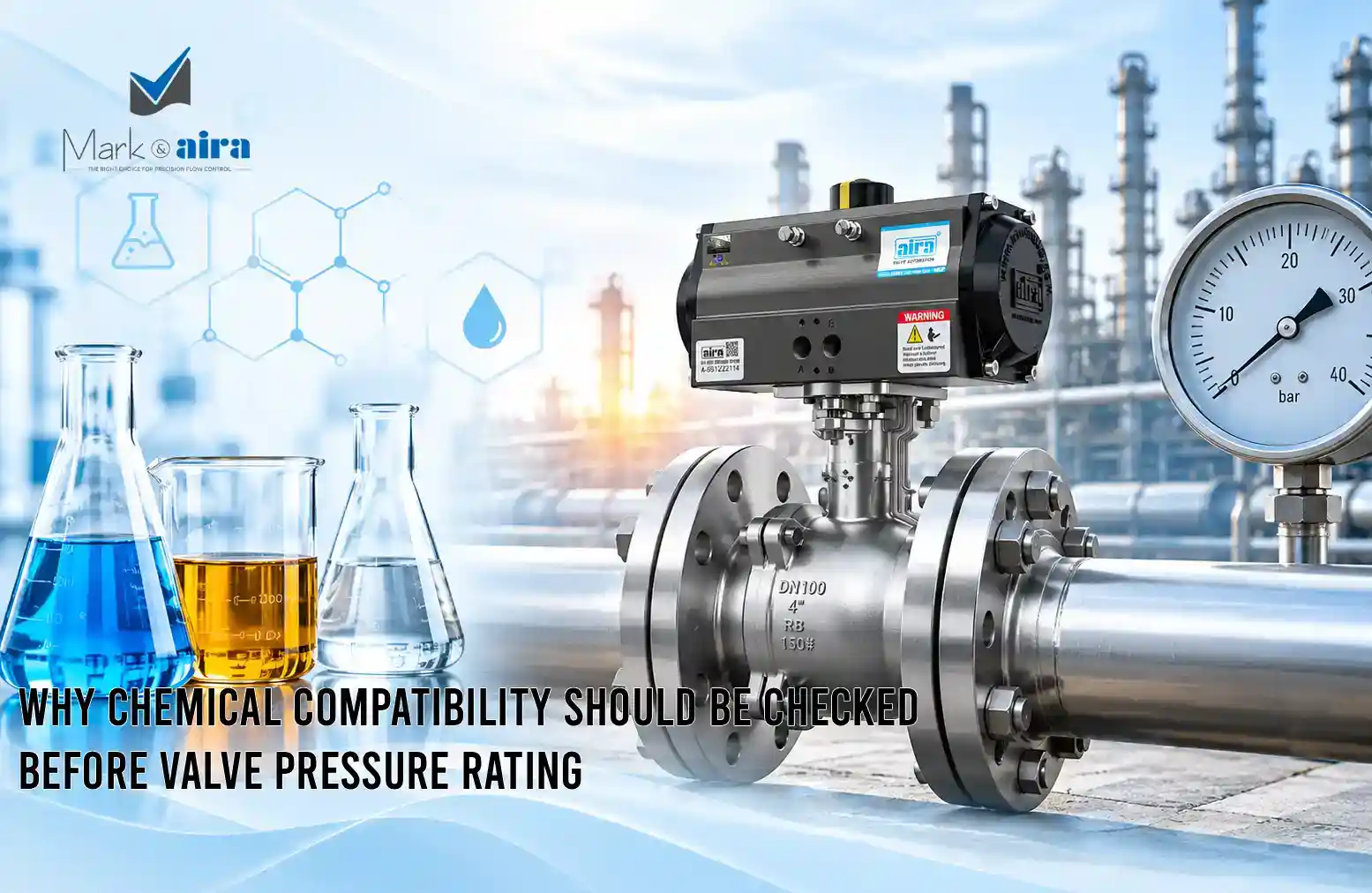
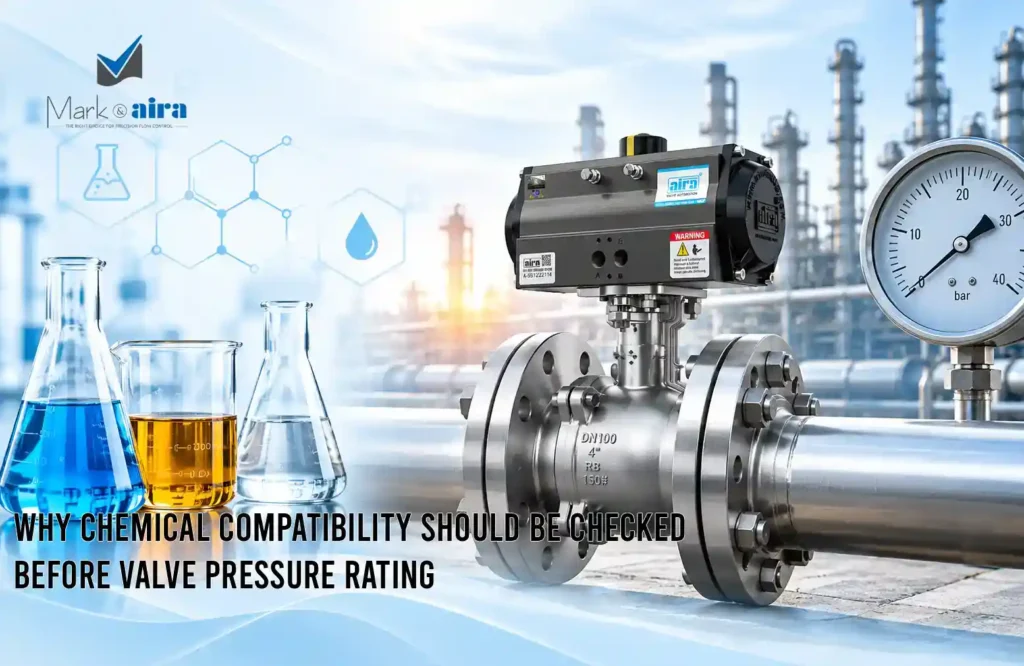
A valve can have the correct size, pressure class, and connection type—and still be unsuitable for a chemical process.
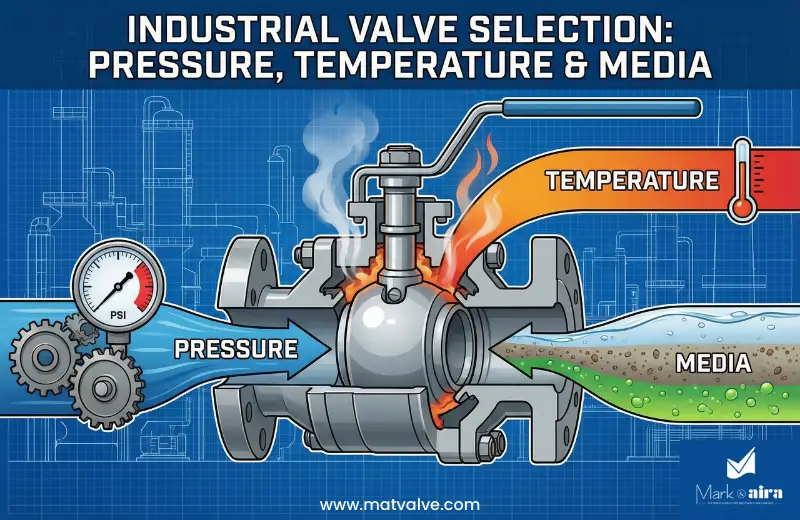
In chemical plants, pressure rating confirms only part of the application requirement. The process fluid can interact with the valve body, trim, seat, seals, lining, and other wetted components. Temperature and chemical concentration can further change how these materials perform.
This means a valve that comfortably handles the system pressure may still experience corrosion, swelling, softening, cracking, leakage, or premature sealing failure if its materials are incompatible with the process media.
For chemical plant engineers and procurement teams, chemical compatibility should therefore be evaluated alongside pressure and temperature—not after them.
Why Isn't Pressure Rating Enough for Chemical Valves?
Pressure rating indicates whether a valve is designed for specified pressure-temperature conditions. It does not automatically confirm that every wetted material is compatible with the chemical passing through it.
Two valves with the same pressure rating can perform very differently when exposed to acids, alkalis, solvents, or other aggressive process media.
Chemical valve selection therefore requires answering three questions together:
What is the chemical? At what concentration? At what temperature?
Only then should the suitability of the valve’s wetted materials be evaluated.
1. The Valve Body Is Only One Part of the Compatibility Check
A common procurement mistake is focusing primarily on body material.
For example, a specification may call for a particular stainless-steel grade because it provides the required corrosion resistance. But the fluid does not necessarily contact only the body.
Depending on valve design, wetted components can include:
- Body
- Ball, disc or plug
- Stem
- Seat
- Liner
- O-rings
- Gaskets
- Diaphragm
If the body survives the chemical but the seat or elastomer deteriorates, the valve can still lose its ability to isolate the process.
Chemical compatibility therefore needs to be checked across the complete wetted-material system.
2. Chemical Concentration Can Change Material Behaviour
Knowing only the chemical name may not be sufficient.
The same chemical at different concentrations can interact differently with valve materials. A material considered suitable for a dilute solution should not automatically be assumed suitable for a more concentrated process stream.
This is particularly important where chemical concentration changes during production, cleaning, dosing or other operating stages.
Procurement specifications should therefore avoid descriptions such as:
“Valve required for acid service.”
A more useful specification identifies the actual chemical and expected concentration range.
That gives engineering teams and suppliers a much stronger basis for evaluating material compatibility.
3. Temperature Can Change Chemical Compatibility
A material that performs acceptably with a particular chemical at lower temperature may not provide the same performance as temperature rises.
Higher temperature can increase the severity of chemical attack and can also influence polymer, elastomer and lining performance.
This creates an important selection principle:
Chemical compatibility data should be considered at the actual operating temperature—not at chemical concentration alone.
For applications involving temperature variation, engineers should consider both normal and credible operating conditions defined by the project.
This is also why pressure, temperature and media should be reviewed as a combined service envelope rather than as separate specification fields.
4. Seats and Seals Can Fail Before the Valve Body
Not every chemical compatibility problem appears as visible body corrosion.
Soft sealing components may experience deterioration such as swelling, hardening, softening or loss of mechanical properties depending on the material and chemical exposure.
The result can be:
- Increasing operating torque
- Internal leakage
- External leakage
- Poor seat contact
- Shorter maintenance intervals
This can create a confusing maintenance situation because the valve body may appear to be in acceptable condition while sealing performance repeatedly deteriorates.
If seats or seals require frequent replacement, the team should investigate whether media compatibility and temperature are contributing to the problem rather than treating each replacement as routine wear.
Readers also like to read,
5. Lined and Non-Metallic Valves Can Provide Alternatives
For certain aggressive chemical services, engineers may consider lined or non-metallic valve designs.
Materials such as suitable fluoropolymers or engineering plastics can offer useful chemical resistance for specific applications. However, these solutions also have operating limitations.
Selection must still consider:
| Parameter | Why It Matters |
|---|---|
| Chemical & concentration | Determines material compatibility |
| Temperature | Can affect liner/polymer performance |
| Pressure | Must remain within valve limits |
| Mechanical loading | Important for installation and operation |
| Valve function | Isolation and control duties differ |
| Cycling frequency | Influences wear and service life |
“The correct approach is therefore not ‘plastic is better for chemicals’ or ‘metal is stronger.'”
The question is:
Which valve construction is appropriate for this specific chemical service?
A Practical Chemical Valve Selection Sequence
Instead of starting with pressure class alone, engineering and procurement teams can follow a more application-focused sequence:
Process media → concentration → temperature → pressure → wetted materials → valve function → sealing requirement → actuation
This sequence helps identify chemical compatibility concerns before the final valve configuration is selected.
For particularly aggressive or unfamiliar media, material compatibility should be confirmed against reliable manufacturer data and applicable project requirements rather than assumed from previous applications.
Warning Signs of a Compatibility Problem
Chemical incompatibility does not always produce immediate catastrophic failure.
Early indicators may include recurring seat leakage, external seepage around sealing interfaces, unusual discoloration or surface attack, increasing operating torque, liner deterioration or repeated seal replacement.
When the same problem returns after maintenance, replacing the affected component with the same material may simply restart the failure cycle.
The root-cause investigation should consider whether the material itself is suitable for the media, concentration, and temperature.
Procurement Checklist for Chemical-Service Valves
Before requesting a chemical-process valve, provide the supplier with:
| Information | Example |
|---|---|
| Process chemical | Exact media being handled |
| Concentration | Normal/range where relevant |
| Temperature | Normal and specified design conditions |
| Pressure | Operating/design requirements |
| Wetted material requirement | Where specified |
| Seat/seal requirement | Based on service conditions |
| Valve function | Isolation, control or other duty |
| Actuation | Manual, pneumatic or electric |
| Project requirements | Applicable standards/documentation |
A specification containing this information is far more useful than simply requesting a “chemical-resistant valve.”
Supporting Chemical Process Valve Selection
Mark & Aira Trading supplies valve solutions for chemical, petrochemical and industrial process applications across the UAE and the Middle East.
Depending on the application, options may include metallic, lined and non-metallic valve configurations. Selection should be based on the actual process media, concentration, temperature, pressure and project requirements.
If you are evaluating valves for an aggressive chemical application, contact Mark & Aira Trading with your process conditions or valve datasheet for application-specific support.
FAQ
Is pressure rating enough to select a chemical valve?
No. Pressure rating is only one selection parameter. Chemical compatibility of the body, trim, seats, seals and other wetted materials should also be evaluated.
Why does chemical concentration matter?
Material performance can vary with chemical concentration. Suitability for a dilute solution does not automatically confirm suitability for a higher concentration.
Does temperature affect chemical resistance?
Yes. Temperature can significantly influence chemical attack as well as the performance of elastomers, polymers and valve linings.
Are non-metallic valves always better for corrosive chemicals?
No. Their suitability depends on chemical compatibility, pressure, temperature, mechanical requirements, and valve duty.