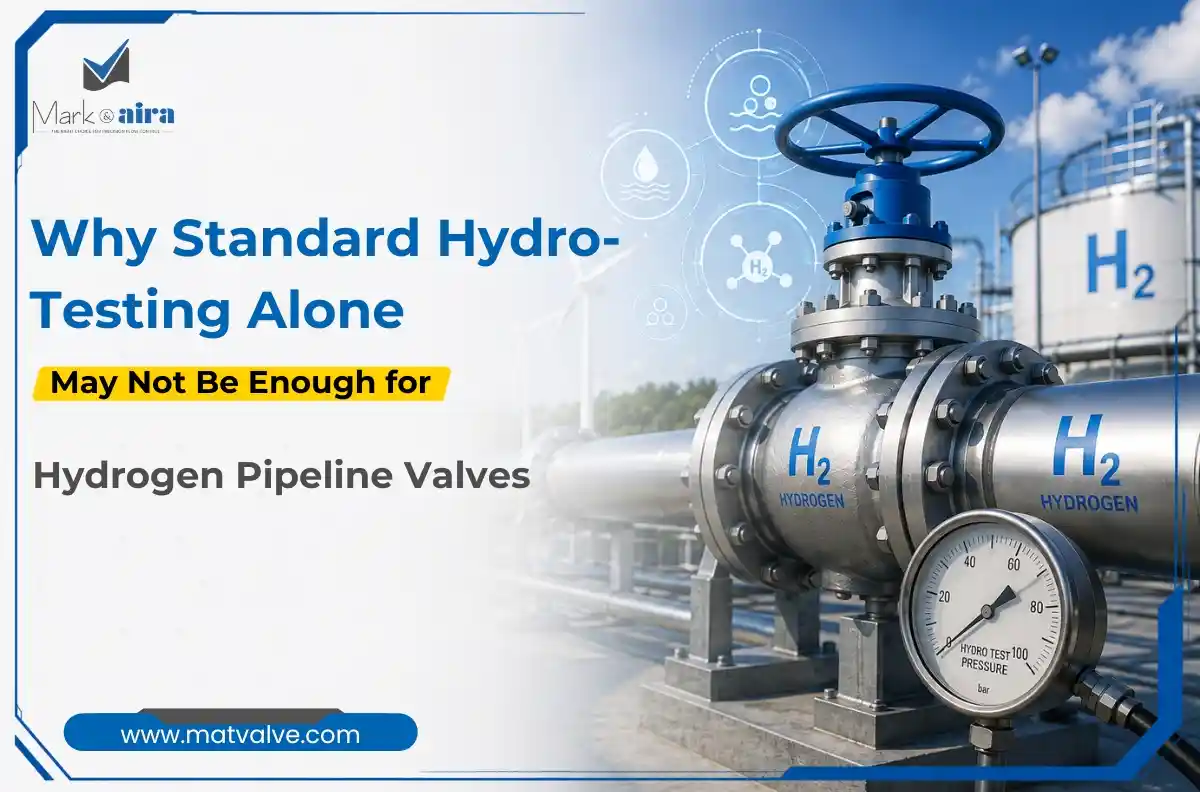
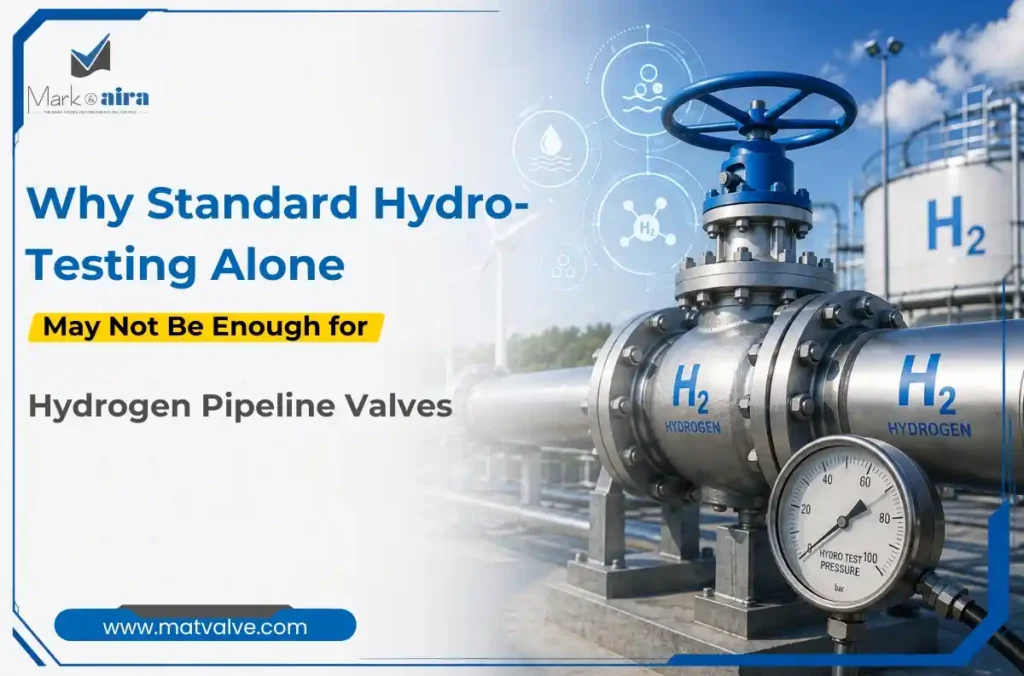
Hydrogen infrastructure is expanding as industries explore hydrogen for energy, refining, chemicals, mobility, and lower-carbon industrial processes. But transporting hydrogen through pipelines creates a fundamental engineering challenge: maintaining reliable containment throughout the system.
For valves, pressure rating alone does not answer this challenge.
A valve may successfully pass conventional hydrostatic testing while still requiring additional verification for its intended hydrogen service. Hydro-testing is important for confirming pressure-boundary integrity, but hydrogen projects may also need to consider seat tightness, stem packing, body joints, material compatibility, operating cycles, and project-specific leakage requirements.
For engineers and procurement teams, hydrogen gate valve leak testing should therefore be viewed as part of a complete valve qualification strategy—not as a single pass-or-fail test.
Is Hydrostatic Testing Enough for Hydrogen Valves?
Hydrostatic testing verifies whether a valve’s pressure-containing components can withstand a specified test pressure using a liquid medium, typically water. However, passing this test does not automatically demonstrate the gas-tight sealing performance required for every hydrogen application. Depending on the applicable standard and project specification, additional seat leakage, gas leakage, fugitive-emission, material, and functional verification may be required. The correct testing strategy depends on valve design, hydrogen service conditions, pressure, temperature, and defined leakage acceptance criteria.
Why Hydrogen Containment Needs Special Attention
Hydrogen containment depends on much more than the valve body.
A pipeline valve contains several interfaces where leakage performance matters:
| Area | Main Concern |
|---|---|
| Valve seat | Internal leakage when the valve is closed |
| Stem packing | External or fugitive leakage |
| Body-bonnet joint | Pressure-boundary leakage |
| Flanged connections | Joint sealing integrity |
| Gaskets and auxiliary connections | Potential external leakage paths |
These areas do not necessarily respond identically to every testing method.
A pressure test primarily asks:
Can the pressure-containing structure safely withstand the specified test condition?
A leakage test asks:
Can the relevant sealing interface maintain the specified tightness under defined conditions?
Both questions matter in hydrogen infrastructure.
What Hydrostatic Testing Actually Proves
Hydrostatic testing remains an important part of valve manufacturing and pipeline quality assurance. It should not be treated as an outdated or ineffective test simply because the final process medium is hydrogen.
Its primary role is to evaluate pressure-boundary integrity.
Depending on the applicable standard and project specification, hydro-testing can help identify unacceptable defects in the valve body, bonnet, joints, and other pressure-containing components.
The limitation is in how the result is interpreted.
Passing hydro-testing does not necessarily mean every potential hydrogen leakage path or service condition has been evaluated.
That distinction is important when engineers develop inspection and test plans for hydrogen projects.
Pressure Integrity vs. Leak Integrity
| Verification | Primary Purpose |
|---|---|
| Hydrostatic test | Pressure-boundary integrity |
| Seat leakage test | Closed-valve isolation performance |
| Gas leak test | Leakage under specified gas-test conditions |
| Fugitive-emission evaluation | External leakage from sealing interfaces |
| Material verification | Confirms specified materials |
Where Can Hydrogen Valve Leakage Develop?
Seat Leakage
For an isolation valve, seat performance determines whether the closed valve provides the required level of isolation.
Seat leakage can be influenced by surface condition, alignment, manufacturing tolerance, differential pressure, contamination, temperature, and repeated cycling.
Procurement teams should therefore verify the specified seat leakage acceptance criterion, rather than relying only on a statement that the valve has been pressure tested.
Stem and Packing Leakage
The stem presents another important sealing challenge because it must move through the pressure boundary during valve operation.
Packing performance can change due to cycling, temperature variation, stem condition, vibration, or incorrect adjustment.
Where external emissions are a project concern, stem sealing and applicable fugitive-emission requirements should therefore form part of valve qualification.
Static Joint Leakage
Body-bonnet connections, gaskets, flanges, drains, vents, and auxiliary connections can also become potential leakage locations.
Their reliability depends not only on valve manufacture but also on correct assembly and installation.
This is why hydrogen containment must ultimately be treated as a system-level engineering issue.
Engineering Insight: Passing hydrostatic testing and demonstrating hydrogen containment are not identical objectives. Hydro-testing verifies an essential part of valve integrity, while service-specific leakage requirements determine what additional verification may be necessary.
Material and Sealing Considerations for Hydrogen Service
Testing alone cannot compensate for a valve that is unsuitable for its operating environment. Material selection, sealing design, pressure and temperature conditions, and expected operating cycles all influence long-term performance in hydrogen pipelines.
Hydrogen compatibility should therefore be evaluated against the actual service conditions, rather than treating “hydrogen service” as one universal specification.
Depending on the application, engineers may need to consider:
- Material grade and mechanical properties
- Hydrogen pressure and temperature
- Material hardness and heat treatment
- Welds and heat-affected zones
- Seat and packing materials
- Expected valve cycling
- Required service life
Hydrogen-assisted material degradation can be a concern for susceptible metallic materials under certain conditions. This does not mean every material exposed to hydrogen will experience the same problem; susceptibility depends on the material, stress state, hydrogen environment, temperature, and other operating factors.
Material traceability is therefore particularly valuable for critical pipeline valves because it allows project teams to confirm that supplied components match the approved specification.
Building the Right Hydrogen Valve Testing Strategy
There should not be a single universal testing sequence for every hydrogen pipeline valve.
The appropriate programme should be defined by the governing standard, valve design, project specification, and actual operating conditions.
A practical qualification approach may include:
1. Pressure Testing
Verify the integrity of the pressure-containing structure according to the applicable specification.
2. Seat Leakage Testing
Confirm that the closed valve achieves the required isolation performance.
3. Gas Leakage Testing
Where specified, gas-based testing can provide additional verification of leakage performance under defined test conditions.
Because pneumatic testing involves substantially more stored energy than liquid testing, it must be conducted using an approved procedure and appropriate safety controls.
4. Fugitive-Emission Verification
Where required by the project, verify leakage performance around dynamic and static sealing interfaces such as the stem packing.
5. Functional Testing
Confirm that the valve opens and closes correctly and that the operating system provides sufficient torque or thrust under the specified conditions.
The key principle is simple:
Do not replace hydrostatic testing with another test simply because the service medium is hydrogen. Define what needs to be verified, then use the appropriate test for each requirement.
What Procurement Teams Should Verify
| Procurement Check | Why It Matters |
|---|---|
| Material specification and traceability | Confirms approved construction materials |
| Design pressure and temperature | Matches the actual service envelope |
| Hydrostatic test records | Verifies pressure-boundary testing |
| Seat leakage results | Confirms isolation performance |
| Additional gas testing, if specified | Supports project-specific leakage requirements |
| Fugitive-emission requirements | Addresses external leakage where applicable |
| Actuator sizing | Ensures reliable valve operation |
| Inspection and test documentation | Provides traceable evidence of compliance |
Reliability Continues After Commissioning
Factory testing represents valve condition at the time of manufacture. Hydrogen pipeline reliability must continue throughout the operating lifecycle.
Packing relaxation, repeated cycling, temperature changes, vibration, piping loads, and normal component ageing can gradually affect sealing performance.
Maintenance and reliability teams should therefore monitor indicators such as:
- External leakage
- Changes in valve operating torque
- Slower valve response
- Packing condition
- Actuator performance
- Seat isolation performance
Inspection intervals should be based on valve criticality, service conditions, operating history, and site maintenance requirements rather than applying one fixed schedule across an entire pipeline.
Key Takeaways
- Hydrostatic testing remains important for verifying valve pressure-boundary integrity.
- Passing a hydrostatic test does not automatically demonstrate every aspect of hydrogen leak performance.
- Seat leakage, stem packing, static joints, and fugitive emissions may require separate consideration.
- Materials and sealing systems should be evaluated against actual hydrogen service conditions.
- Testing requirements should follow applicable standards and project specifications.
- Procurement teams should define test documentation and acceptance criteria before ordering valves.
Supporting Hydrogen Pipeline Projects
Hydrogen infrastructure places demanding requirements on valve materials, sealing performance, documentation, and operational reliability.
Mark & Aira Trading supports EPC contractors, project engineers, consultants, and procurement teams across the UAE and Middle East with industrial valve solutions for pipeline and energy applications. Our team can assist with application-based valve selection, actuation requirements, technical documentation, and project-specific valve specifications.
Planning a Hydrogen Pipeline or Energy Project?
Industrial valve selection for hydrogen infrastructure should consider more than size and pressure class. Material suitability, leakage requirements, testing, actuation, documentation, and lifecycle reliability all need to align with the project’s operating conditions.
Contact Mark & Aira Trading to discuss industrial valve requirements for hydrogen, pipeline, and energy infrastructure projects across the UAE and Middle East.