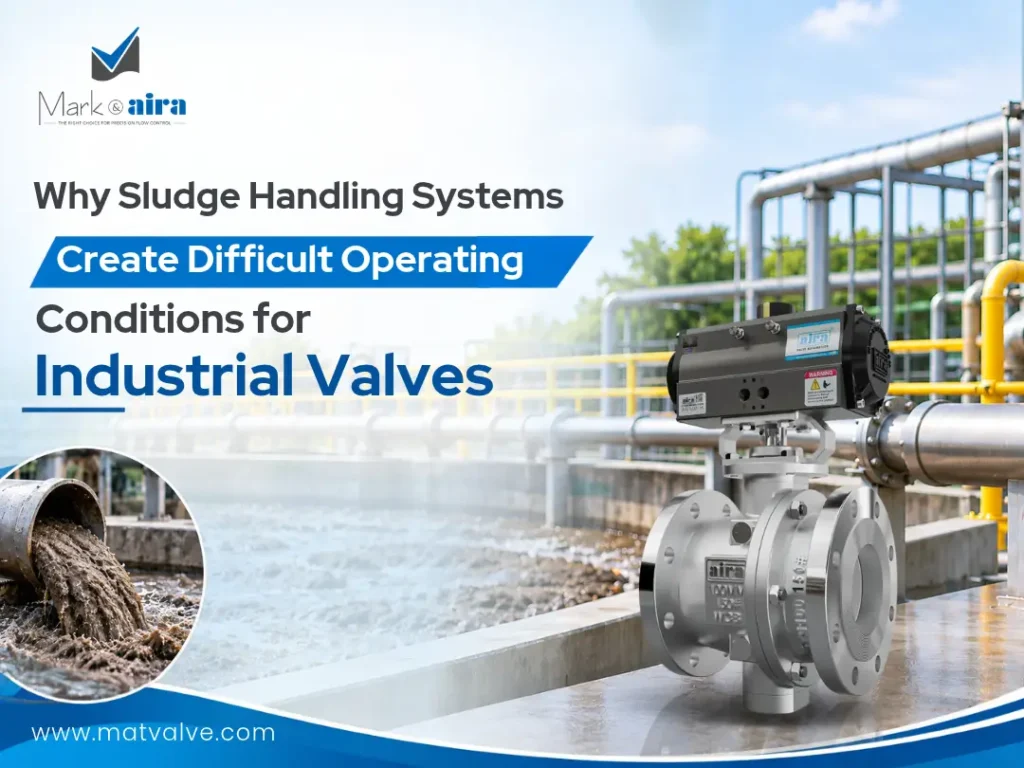
Wastewater treatment plants handle more than contaminated water. During treatment, suspended solids, organic matter, fibres and other contaminants are separated from the water, producing sludge that must be transferred, processed and disposed of.
Unlike clean-water applications, sludge handling lines can experience changing fluid consistency, high solids concentration, deposits and abrasive particles. These conditions can create difficulties for valves, including restricted movement, incomplete closure, internal wear and frequent maintenance.
For wastewater plant operators and maintenance engineers, selecting valves for sludge service requires understanding the actual characteristics of the material being handled—not simply the pipeline size and pressure rating.
Why Is Sludge Difficult for Industrial Valves?
Sludge is a mixture of water and accumulated solids. Its consistency varies depending on the treatment stage, solids concentration, organic content and dewatering process.
Some sludge streams are relatively fluid, while others become thick and difficult to pump.
These changing characteristics can affect valve performance in several ways:
- Solids accumulate around internal components.
- Fibres and debris interfere with valve closure.
- Thick sludge increases operating resistance.
- Abrasive particles contribute to internal wear.
- Deposits can restrict flow and complicate maintenance.
This is why industrial valve selection for wastewater applications should begin with the process media and operating conditions.
Solids accumulation
CAUSEHeavier particles settle where flow is limited.
EFFECTRestricted movement and incomplete closure.
Thick sludge
CAUSEHigh solids concentration makes the media more viscous.
EFFECTHigher operating torque and actuator strain.
Abrasive particles
CAUSESand, grit and minerals pass through the valve.
EFFECTWorn seats and weaker shut-off over time.
Settled deposits
CAUSEStationary sludge builds up around the seating area.
EFFECTLeakage, blockage and frequent maintenance.
1. Solids Accumulation Can Restrict Valve Movement
One of the main challenges in sludge handling is the accumulation of suspended solids around internal valve components.
When sludge passes through a valve, heavier particles may settle in areas with limited flow movement. Over time, accumulated material can interfere with the closure element or sealing surfaces.
This may cause incomplete closure, internal leakage or increased operating resistance.
The problem becomes more significant in pipelines carrying thick sludge or material with a high concentration of suspended solids.
Engineers should therefore consider the valve’s internal geometry and its ability to handle the actual solids content.
2. Thick Sludge Can Increase Operating Torque
Sludge does not always flow like ordinary water.
As solids concentration increases, the material may become more viscous and require greater force to move or displace during valve operation.
This can increase the operating load on the valve, particularly when deposits develop around moving components.
For automated installations, higher operating resistance can also affect actuator performance.
Selecting an actuator without considering actual operating torque can lead to incomplete movement or unnecessary mechanical stress.
Before increasing actuator output, maintenance teams should investigate whether deposits, material accumulation or internal interference are contributing to the problem.
For more detail, refer to our guide on valve torque calculation for industrial applications.
3. Abrasive Particles Can Accelerate Internal Wear
Sludge may contain sand, grit, mineral particles and other suspended contaminants depending on its source and treatment stage.
When these particles move through valves, they can gradually wear sealing surfaces and internal components.
The extent of wear depends on particle size, concentration, hardness, flow velocity and valve design.
Repeated exposure may eventually affect shut-off performance and increase maintenance requirements.
This is particularly important in sludge transfer systems where valves operate frequently or handle material with significant abrasive content.
4. Deposits Can Cause Leakage and Blockage
When sludge remains stationary inside a pipeline or valve body, solids can settle and accumulate.
If deposits develop around the seating area, the valve may not close completely. If material accumulates in restricted passages, it can also interfere with flow.
A valve that repeatedly develops leakage or becomes difficult to operate may therefore have a process-related problem rather than simply a defective component.
Maintenance teams should inspect the internal condition and determine whether the valve configuration is suitable for the sludge characteristics.
Which Valve Designs Should Engineers Evaluate?
Valve selection depends on sludge consistency, solids concentration, particle characteristics, pressure, temperature and required operating function.
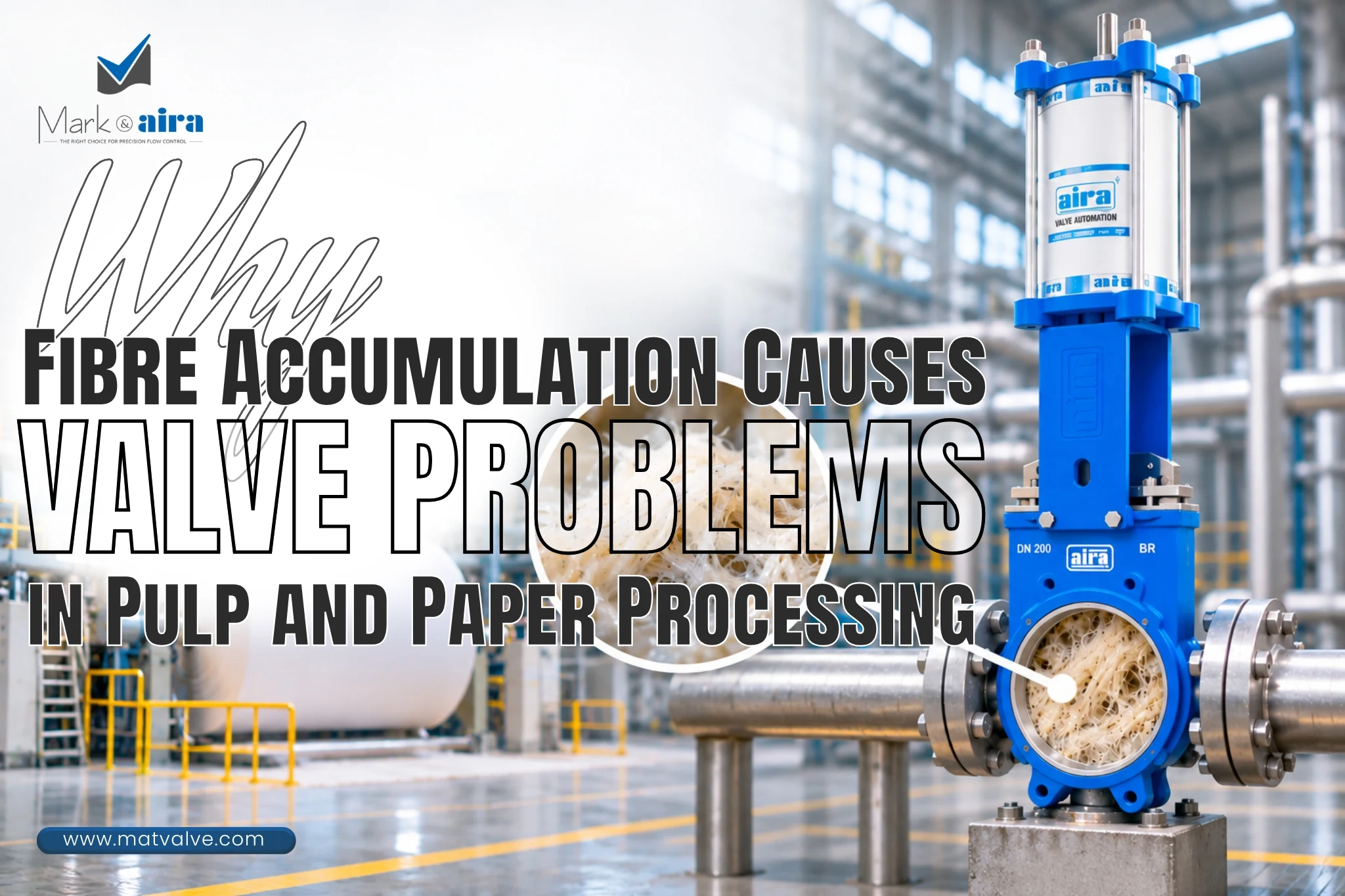
For suitable solids-handling isolation duties, engineers may evaluate knife edge gate valves. Their blade-shaped closure element is designed for applications involving suspended solids and challenging media.
Bi-Directional Knife Edge Gate Valve (aira brand)
One option to evaluate is the aira brand Bi-Directional Knife Edge Gate Valve. Its published design features include a full-port flow passage and an internal body arrangement intended to reduce solids accumulation that could interfere with closure.
Actual suitability for a particular sludge application must be confirmed against the process conditions and manufacturer’s technical recommendations.
For other wastewater duties, engineers may also consider appropriate non-metallic valve solutions for WTP and ETP applications, depending on chemical compatibility, solids content, pressure and temperature limitations.
Practical Checklist for Sludge-Service Valve Selection
Before specifying valves for sludge transfer systems, engineering and procurement teams should verify:
| Selection Parameter | What to Consider |
|---|---|
| Sludge consistency | Fluid, thickened or concentrated |
| Solids concentration | Percentage of suspended solids |
| Particle characteristics | Size, hardness and abrasive potential |
| Operating pressure | Normal and design pressure |
| Temperature | Normal operating conditions |
| Valve function | Isolation or flow regulation |
| Internal design | Resistance to accumulation and blockage |
| Actuation | Operating torque and actuator capacity |
| Maintenance access | Inspection, cleaning and replacement |
The chemical composition of sludge should also be considered where corrosive substances or treatment chemicals are present. Material selection should reflect the complete pressure, temperature and media conditions.
How Can Maintenance Teams Reduce Valve Problems?
Regular inspection helps identify deposits, wear and increasing operating resistance before they affect plant operation.
Maintenance teams should monitor recurring blockages, leakage, valve movement and actuator performance.
If the same valve repeatedly requires cleaning or develops incomplete closure, simply repeating the maintenance activity may not solve the problem.
The team should review whether the valve design, material selection and installation arrangement are appropriate for the actual sludge characteristics.
Recording maintenance history can also help identify recurring failures and support better replacement decisions.
Supporting Wastewater Treatment Applications
Mark & Aira Trading supports water treatment, wastewater and industrial projects across the UAE and Middle East with valve solutions for different process conditions.
For sludge handling applications, valve requirements can be evaluated against solids concentration, fluid consistency, pressure, temperature, chemical exposure and isolation requirements.
Planning a wastewater or sludge handling project?
Contact Mark & Aira Trading to discuss your valve requirements.
Get a Free QuotationFrequently Asked Questions
Why are valves difficult to operate in sludge handling systems?
High solids concentration, deposits and thick sludge can increase operating resistance and interfere with internal valve movement.
Which valves are considered for sludge handling?
Knife edge gate valves are commonly evaluated for suitable solids-handling isolation duties. Final selection depends on sludge consistency, particle characteristics, pressure and temperature.
Can sludge cause valve leakage?
Yes. Accumulated solids can interfere with sealing surfaces and prevent complete closure.
Does sludge concentration affect valve selection?
Yes. Higher solids concentration can change flow behaviour, increase operating resistance and influence valve design requirements.
What should procurement teams check before purchasing sludge-service valves?
Important details include sludge consistency, solids concentration, particle size, pressure, temperature, chemical composition, valve function and actuator requirements.