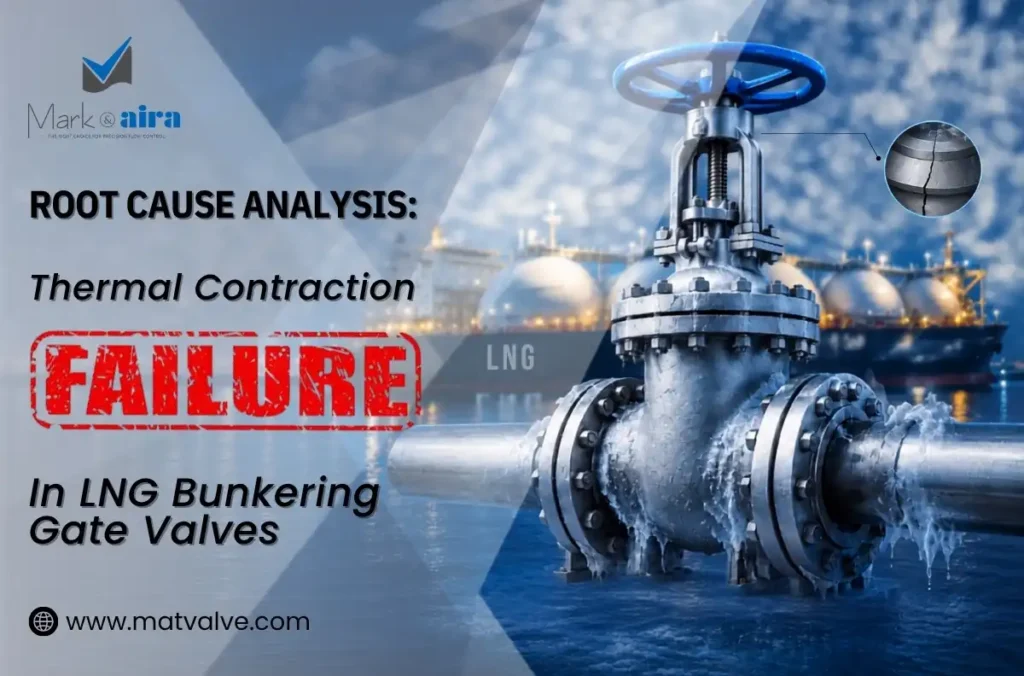
Liquefied Natural Gas (LNG) is playing an increasingly important role in the global energy transition. As more ports, marine operators, and industrial facilities adopt LNG as a cleaner alternative to conventional fuels, LNG bunkering infrastructure continues to expand across the Middle East, Europe, and Asia.
Unlike conventional process plants, LNG bunkering systems operate under cryogenic conditions, where the temperature of liquefied natural gas remains close to −162°C. At these temperatures, every component within the piping system—including valves, pipelines, seals, and actuators—behaves differently than it would under ambient operating conditions.
Among these components, gate valves are widely used to isolate LNG flow during loading, unloading, maintenance, and emergency shutdown operations. Their ability to provide reliable shut-off makes them essential in cryogenic transfer systems. However, maintaining sealing integrity at extremely low temperatures requires far more than simply selecting a valve with the correct pressure rating.
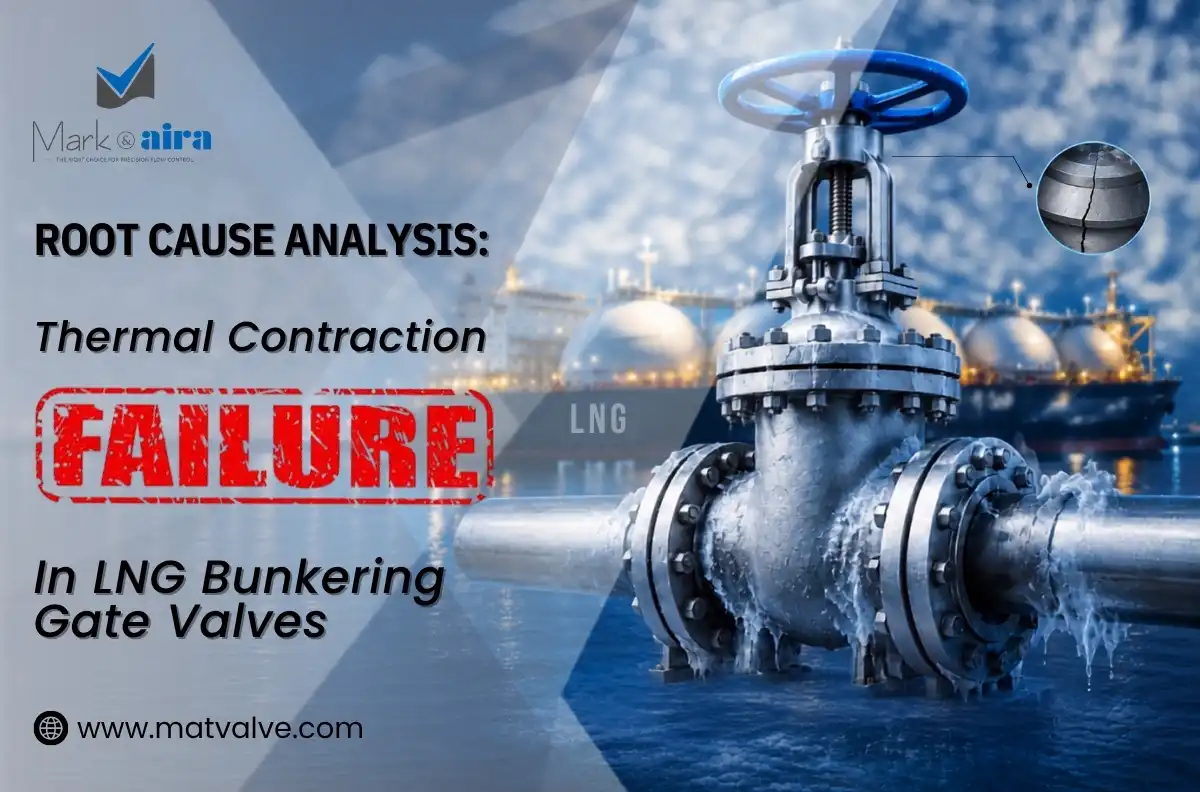
One of the biggest engineering challenges is thermal contraction.
As metallic components cool rapidly during LNG transfer, they naturally shrink. Since every material contracts at a different rate, internal clearances change, sealing forces vary, and mechanical stresses develop throughout the valve assembly. If these dimensional changes are not properly considered during design, manufacturing, or installation, the valve may experience leakage, increased operating torque, or reduced operational reliability.
While thermal contraction is an expected physical phenomenon, its impact on valve performance is often underestimated during project planning. Understanding how and why these failures occur helps engineers make better decisions when selecting, installing, and maintaining cryogenic isolation valves.
In this article, we examine the root causes of LNG gate valve thermal contraction, explore its most common failure modes, and discuss engineering practices that improve long-term reliability in LNG bunkering applications.
What Causes Thermal Contraction Failures in LNG Gate Valves?
Thermal contraction failures occur when gate valve components shrink as they are exposed to LNG temperatures of approximately −162°C. Because materials such as the valve body, stem, gate, bonnet, and seats do not contract at exactly the same rate, differential contraction develops within the valve assembly. This can lead to stem misalignment, reduced seat contact pressure, packing leakage, increased operating torque, and thermal binding. Proper cryogenic valve design, suitable material selection, precision manufacturing, and cryogenic testing are essential to minimise these risks and maintain reliable valve performance throughout repeated LNG bunkering operations.
Why Thermal Contraction Matters in LNG Bunkering
Every LNG transfer operation subjects valves to rapid and repeated temperature changes.
A valve installed at ambient temperature may cool by more than 180°C within a short period once cryogenic LNG begins flowing through the pipeline. During shutdown, the same valve gradually returns toward ambient conditions before repeating the cycle during the next transfer operation.
This continuous cooling and warming cycle creates repeated expansion and contraction throughout the valve assembly.
Unlike corrosion or erosion, thermal contraction is not a visible form of damage. Instead, it changes the dimensions of critical components by very small amounts. Although these dimensional changes may only be measured in fractions of a millimetre, they are often sufficient to influence sealing performance, operating torque, and component alignment.
Why LNG Bunkering Is More Challenging Than Conventional Service
Conventional Pipeline Service | LNG Bunkering Service |
Operates near ambient temperature | Operates at approximately −162°C |
Minimal thermal movement | Significant thermal contraction |
Stable sealing conditions | Constant dimensional changes during transfer cycles |
Lower mechanical stress | High thermal stress due to repeated cooling and warming |
Standard valve design is often sufficient | Specialised cryogenic valve design is essential |
These operating conditions explain why cryogenic valve engineering requires much tighter control over materials, clearances, and manufacturing tolerances than conventional industrial valve applications.
Engineering Insight
Thermal contraction itself is not the failure.
The real challenge begins when different valve components contract by different amounts, altering internal clearances and sealing forces. Managing this differential movement is one of the most important objectives of cryogenic valve design.
Common Thermal Contraction Failure Modes
Thermal contraction does not typically result in an immediate valve failure. Instead, it gradually changes the relationship between internal components during repeated cooling and warming cycles. Over time, these small dimensional changes can affect valve sealing, operating performance, and overall reliability.
The table below summarises the most common failure modes observed in cryogenic gate valves used for LNG bunkering applications.
Failure Mode | Primary Cause | Operational Impact |
Stem Shrinkage | Differential contraction between stem and body | Increased operating torque and alignment issues |
Seat Leakage | Reduced sealing contact pressure | Internal leakage and loss of tight shut-off |
Packing Leakage | Uneven contraction around the stem | Fugitive emissions and product loss |
Thermal Binding | Reduced internal clearances | Difficult or impossible valve operation |
Component Misalignment | Unequal contraction of valve parts | Accelerated wear and reduced service life |
Let’s examine the most critical failure modes in more detail.
Stem Shrinkage and Misalignment
The valve stem is responsible for transmitting movement from the actuator or handwheel to the gate. During cryogenic service, it contracts along its length as temperatures rapidly decrease.
If the stem contracts differently from the bonnet or body, the gate may no longer travel exactly as intended. This slight change in alignment can increase friction, affect seating accuracy, and place additional stress on guides and sealing surfaces.
While the dimensional change may be extremely small, repeated thermal cycles can gradually influence valve performance, particularly in applications where precise shut-off is essential.
Seat Leakage
Reliable isolation depends on consistent contact between the gate and the seating surfaces.
When thermal contraction alters this contact pressure, microscopic leak paths may develop. Initially, these leaks may be difficult to detect, but over time they can compromise the valve’s sealing performance and reduce operational safety.
In LNG bunkering systems, even minor leakage can result in:
- Product loss
- Reduced process efficiency
- Increased maintenance requirements
- Potential safety concerns during transfer operations
Maintaining sealing integrity under cryogenic conditions is therefore one of the most important design objectives for LNG isolation valves.
Packing Leakage
Stem packing must provide a leak-tight seal while still allowing smooth stem movement.
As temperatures decrease, the stem, packing material, and gland assembly may contract at different rates. If packing compression changes beyond the designed operating range, sealing performance can be affected.
Common warning signs include:
- Frost formation around the bonnet
- External leakage near the stem
- Increased fugitive emissions
- Frequent packing adjustments
Selecting packing materials suitable for cryogenic service and following recommended maintenance practices help minimise these risks.
Readers also like to read: pressure-temperature relationship in valves
Thermal Binding
Thermal binding occurs when internal clearances become smaller than intended after cooling.
Instead of moving freely, the gate experiences increased resistance during opening or closing. In severe cases, the valve may require significantly higher operating torque or become difficult to operate altogether.
Unlike wear-related problems, thermal binding is usually linked to engineering tolerances and dimensional changes rather than surface damage.
Root Cause Analysis: Why Do These Failures Occur?
The visible symptoms—such as leakage or increased operating torque—are often the result of deeper engineering factors. Identifying the root cause is essential for improving valve reliability and preventing repeat failures.
The four factors below account for most thermal contraction-related issues in cryogenic gate valves.
1. Material Behaviour at Cryogenic Temperatures
Every engineering material has its own coefficient of thermal expansion, which determines how much it expands or contracts as temperature changes.
In a cryogenic valve assembly, different components may be manufactured from different alloys. If these materials contract at different rates, internal stresses develop as temperatures approach LNG operating conditions.
Material selection therefore considers more than strength alone. Engineers also evaluate:
- Thermal expansion characteristics
- Low-temperature toughness
- Dimensional stability
- Compatibility between mating components
Using compatible materials helps minimise differential contraction throughout the valve assembly.
2. Valve Design and Internal Clearances
Cryogenic gate valves require carefully engineered clearances to accommodate thermal movement.
If clearances are too small, components may bind during cooling. If they are too large, sealing performance may be compromised.
Critical design considerations include:
- Stem guidance
- Seat positioning
- Gate travel
- Internal tolerances
- Extended bonnet configuration
A well-designed cryogenic valve allows components to contract naturally while maintaining alignment and sealing performance.
3. Manufacturing Quality
Cryogenic applications demand a higher level of manufacturing precision than conventional industrial service.
Minor machining deviations that have little effect at ambient temperatures may become significant once the valve is exposed to −162°C.
Quality control should verify:
- Stem straightness
- Seat concentricity
- Surface finish
- Machining accuracy
- Assembly alignment
Consistent manufacturing quality helps ensure predictable valve performance under repeated thermal cycling.
4. Installation and Operating Conditions
Even a correctly designed valve can experience premature problems if installation or operating practices introduce additional stresses.
Examples include:
- Pipeline misalignment
- Excessive flange loading
- Inadequate pipe support
- Rapid temperature transitions
- Incorrect commissioning procedures
Proper installation allows the valve to accommodate normal thermal movement without introducing unnecessary mechanical stress.
Engineering Insight
In LNG service, failures are rarely caused by a single defect. Most thermal contraction issues develop through the combined effects of material behaviour, valve design, manufacturing precision, and operating conditions. Addressing each of these factors during the project lifecycle significantly improves long-term valve reliability.
Engineering Strategies to Prevent Thermal Contraction Failures
Thermal contraction is an inherent characteristic of cryogenic service and cannot be eliminated. The objective is to ensure the valve is engineered to accommodate these dimensional changes without affecting sealing performance or operational reliability.
A combination of appropriate design, material selection, manufacturing quality, and operational practices significantly reduces the risk of thermal contraction-related failures throughout the valve’s service life.
Design for Differential Thermal Movement
Successful cryogenic valve design begins with understanding how every component behaves during rapid cooling.
Rather than preventing thermal contraction, engineers design valves that allow controlled movement while maintaining alignment between critical sealing surfaces.
Key design considerations include:
- Optimised internal clearances
- Balanced stem guidance
- Controlled gate movement
- Proper seat alignment
- Extended bonnet configuration
These design features help maintain consistent valve performance despite repeated thermal cycling.
Select Materials Suitable for Cryogenic Service
Material selection plays a critical role in valve reliability.
Components operating at −162°C must maintain adequate strength, toughness, and dimensional stability throughout repeated cooling and warming cycles.
When evaluating materials, engineers typically consider:
Engineering Requirement | Why It Matters |
Low-temperature toughness | Reduces the risk of brittle fracture |
Thermal expansion characteristics | Minimises differential contraction |
Corrosion resistance | Improves long-term durability |
Material compatibility | Maintains dimensional stability between components |
Selecting compatible materials throughout the valve assembly helps reduce internal stress while improving long-term reliability.
Use Extended Bonnet Configurations
One of the defining features of cryogenic gate valves is the extended bonnet.
Unlike conventional valves, cryogenic designs position the stem packing away from the extremely cold process media.
This provides several advantages:
- Maintains packing performance
- Reduces heat transfer to external components
- Improves stem sealing reliability
- Simplifies maintenance activities
For LNG bunkering applications, an extended bonnet is considered an essential design feature rather than an optional enhancement.
Validate Performance Through Testing
Before installation, cryogenic valves should undergo appropriate testing to verify their suitability for low-temperature service.
Different tests evaluate different aspects of valve performance.
Test | Purpose |
Cryogenic Testing | Verifies valve performance at cryogenic temperatures |
Pressure Testing | Confirms body and seat integrity |
Helium Leak Testing | Detects microscopic leakage paths |
Functional Testing | Verifies smooth valve operation throughout the travel range |
Together, these tests provide greater confidence that the valve will perform reliably under actual LNG operating conditions.
Inspection and Maintenance Best Practices
Even a well-designed cryogenic valve requires routine inspection throughout its operating life.
A proactive maintenance programme helps identify small performance changes before they develop into major operational problems or unplanned shutdowns.
Routine Inspection
Visual inspections should focus on identifying early indicators of valve degradation.
Typical inspection points include:
- External leakage
- Frost formation around the bonnet
- Damaged insulation
- Corrosion on external components
- Mechanical damage
Early detection allows maintenance teams to plan corrective action before reliability is affected.
Monitor Valve Performance
Performance monitoring often provides the earliest indication of developing problems.
Maintenance teams should regularly observe:
- Operating torque
- Opening and closing performance
- Stem movement
- Valve response time
- Seat leakage trends
A gradual increase in operating torque or slower valve response may indicate that internal clearances or sealing components require inspection.
Conduct Planned Shutdown Inspections
Major shutdowns provide an opportunity to inspect internal valve components that cannot be assessed during normal operation.
Engineers should evaluate:
Inspection Area | Purpose |
Gate condition | Check for wear or deformation |
Seating surfaces | Verify sealing integrity |
Stem alignment | Detect distortion or bending |
Packing condition | Assess sealing performance |
Internal clearances | Identify signs of thermal movement |
These inspections help determine whether repeated thermal cycling has affected long-term valve performance.
Procurement Considerations for LNG Gate Valves
Selecting a gate valve for LNG bunkering involves more than matching pressure class or pipe size.
Procurement teams should ensure that the valve has been specifically engineered and validated for cryogenic service.
Procurement Checklist
Before approving a valve specification, verify the following:
Checklist Item | Why It Matters |
Cryogenic testing reports | Confirms low-temperature performance |
Material traceability | Verifies compliance with project specifications |
Pressure class | Matches system operating conditions |
Fugitive emission compliance | Supports environmental and safety requirements |
Quality documentation | Demonstrates manufacturing consistency |
Supplier engineering support | Provides technical assistance throughout the project |
For critical LNG infrastructure, supplier capability extends beyond supplying a product. Engineering documentation, application support, and technical guidance can be equally important throughout the project lifecycle.
Engineering Insight
In LNG projects, the most successful valve installations begin long before commissioning. Early collaboration between procurement teams, EPC contractors, valve suppliers, and plant engineers helps ensure that valve specifications align with the actual operating conditions rather than relying solely on catalogue data.
Future Trends in Cryogenic Valve Engineering
The LNG industry is evolving rapidly as global demand for cleaner marine fuels and energy infrastructure continues to grow. Along with larger bunkering terminals and longer cryogenic pipeline networks, expectations for valve reliability are becoming increasingly demanding.
Rather than relying solely on periodic maintenance, operators are beginning to adopt technologies that improve performance throughout the entire asset lifecycle.
Digital Engineering & Simulation
Modern valve manufacturers increasingly use advanced engineering tools during product development to predict valve behaviour before manufacturing begins.
Some of the most widely adopted technologies include:
- Computational Fluid Dynamics (CFD) to optimise flow characteristics and minimise pressure losses.
- Finite Element Analysis (FEA) to evaluate thermal stresses and component deformation under cryogenic temperatures.
- Digital Twins to simulate valve performance using real operating data throughout the equipment lifecycle.
These technologies help engineers reduce design risks and improve long-term valve reliability.
Predictive Maintenance
Traditional maintenance schedules are based on operating hours or shutdown intervals.
However, LNG operators are increasingly moving toward condition-based maintenance, where valve health is monitored continuously.
Typical monitoring parameters include:
- Operating torque
- Stem position
- Valve cycle count
- Temperature
- Pressure
- Leakage trends
This approach allows maintenance teams to identify potential problems before they result in unplanned shutdowns, improving plant availability while reducing maintenance costs.
Key Takeaways
Before specifying or maintaining gate valves for LNG bunkering systems, remember these key engineering principles:
✔ Thermal contraction is a natural phenomenon in cryogenic service and cannot be eliminated.
✔ Differential contraction—not thermal contraction itself—is the primary cause of most reliability issues.
✔ Valve performance depends on proper material selection, engineering design, manufacturing quality, and installation practices.
✔ Routine inspection, leak monitoring, and operating torque analysis help identify developing problems before they affect plant safety.
✔ Successful LNG projects consider valve reliability throughout the entire lifecycle—from specification and testing to commissioning and maintenance.
Cryogenic gate valves operate in one of the most demanding environments within the industrial sector. Repeated exposure to LNG temperatures of approximately −162°C creates continuous thermal movement throughout the valve assembly, making thermal contraction an important engineering consideration rather than simply a material characteristic.
While failures such as seat leakage, thermal binding, increased operating torque, or packing leakage are often observed during operation, they are usually symptoms of deeper engineering factors involving material compatibility, design tolerances, manufacturing precision, or installation practices.
By understanding these factors early in the project lifecycle, engineers can specify valves that maintain reliable performance throughout repeated LNG bunkering operations while reducing maintenance requirements and improving overall plant safety.
Supporting LNG Projects with Reliable Valve Solutions
As LNG infrastructure continues to expand across the Middle East and globally, selecting a valve supplier with application knowledge is just as important as selecting the correct valve specification.
Mark & Aira Trading supports EPC contractors, consultants, procurement teams, and industrial operators with valve solutions for LNG, cryogenic, marine, oil & gas, and other severe-service applications. Beyond supplying valves, our team assists with technical documentation, application guidance, and product selection based on project operating conditions.
Whether you’re designing a new LNG bunkering facility, upgrading an existing cryogenic pipeline, or sourcing valves for a large industrial project, selecting components designed for low-temperature service is essential for long-term reliability.
Contact the engineering team at Mark & Aira Trading to discuss cryogenic valve selection, project documentation, and application-specific solutions for demanding industrial environments across the UAE and Middle East.