In many industrial systems, unexpected noise, vibration, or rapid valve damage can indicate a serious underlying issue: valve cavitation. This phenomenon is common in high-pressure applications and, if not addressed, can significantly reduce valve life and system efficiency.
For engineers and procurement managers working in industries such as oil & gas, power plants, and water treatment, understanding cavitation is critical for maintaining reliable operations and avoiding costly downtime.
Quick Overview: What is Valve Cavitation?
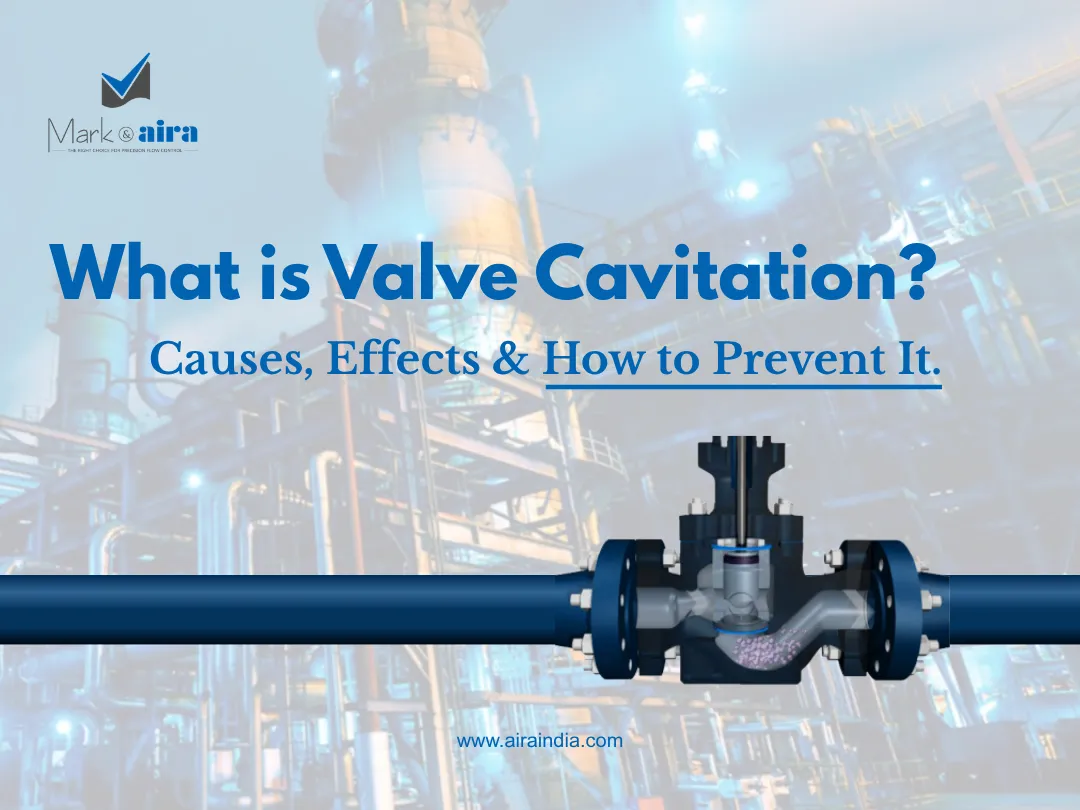
Valve cavitation occurs when the pressure of a fluid drops below its vapor pressure, forming vapor bubbles that collapse violently when pressure recovers. This collapse creates shock waves that can damage valve components, cause noise, vibration, and reduce system performance.
Valve cavitation is a fluid dynamic phenomenon that takes place inside a valve when there is a sudden drop in pressure followed by rapid recovery. As the fluid passes through the valve, its velocity increases and pressure decreases.
If the pressure falls below the fluid’s vapor pressure, small vapor bubbles form. When these bubbles move to a region of higher pressure, they collapse or implode, releasing energy in the form of micro shock waves.
These repeated collapses can gradually erode internal valve surfaces and lead to serious mechanical damage.
Valve Cavitation Working Principle
The working principle of cavitation can be understood in three stages:
1️⃣ Pressure Drop
As fluid flows through a restriction (such as a valve), velocity increases and pressure decreases.
2️⃣ Bubble Formation
If pressure drops below vapor pressure, vapor bubbles form within the fluid.
3️⃣ Bubble Collapse
As pressure recovers downstream, the bubbles collapse violently, generating localized shock waves.
These shock waves are powerful enough to:
- Damage valve trim
- Create vibration in pipelines
- Produce loud noise
- Reduce efficiency of flow control
Causes of Valve Cavitation
Cavitation usually occurs due to improper system design or operating conditions.
Common causes include:
- High Pressure Drop Across Valve
Excessive pressure difference between the inlet and the outlet can trigger cavitation. - Incorrect Valve Sizing
Undersized valves increase fluid velocity, leading to pressure drops. - High Flow Velocity
Faster-moving fluids are more prone to pressure fluctuations. - Fluid Temperature Conditions
Higher temperatures increase vapor pressure, making cavitation more likely. - Improper Valve Selection
Using the wrong valve type for specific applications can increase risk.
Effects of Valve Cavitation
Cavitation can severely impact both the valve and the entire system.
Major effects include:
✔ Valve Surface Erosion
Continuous bubble collapse damages internal surfaces.
✔ Noise Generation
Cavitation often produces loud, crackling sounds.
✔ Vibration in Pipelines
Shock waves create instability in the system.
✔ Reduced Valve Life
Components wear out faster, increasing maintenance costs.
✔ Performance Loss
Flow control becomes less efficient and less predictable.
In severe cases, cavitation can lead to complete valve failure.
Cavitation vs Flashing
Understanding the difference between cavitation and flashing is essential.
Parameter | Cavitation | Flashing |
Bubble Behavior | Collapse after formation | Do not collapse |
Damage Level | High (erosion & shock) | Lower mechanical damage |
Noise & Vibration | Significant | Minimal |
Pressure Recovery | Occurs | Does not occur |
In cavitation, bubbles collapse and cause damage.
In flashing, bubbles remain in vapor form and flow downstream.
How to Prevent Valve Cavitation
Preventing cavitation requires proper engineering design and valve selection.
Effective prevention methods:
- Proper Valve Sizing
Ensure correct valve size to maintain optimal flow velocity. - Multi-Stage Pressure Reduction
Reduce pressure gradually instead of a single large drop. - Use Anti-Cavitation Valve Designs
Special trims help control pressure drop and bubble formation. - Select the Right Valve Type
Globe valves and control valves are better suited for high-pressure applications. - Control Operating Conditions
Maintain stable pressure and temperature conditions.
For better results, engineers should always follow a structured valve selection process and consider system parameters carefully.
Best Valves to Handle Cavitation
Certain valve types are more resistant to cavitation:
- Globe control valves
- Anti-cavitation trim valves
- Multi-stage control valves
- High-performance industrial control valves
These valves are specifically designed to manage pressure drops and reduce cavitation effects.
Industrial Applications Where Cavitation Occurs
Cavitation is commonly observed in:
Oil & Gas Industry
High-pressure pipelines and flow control systems
Power Plants
Steam and water flow systems under high pressure
Water Treatment Plants
Pressure regulation and filtration systems
Chemical Processing
Fluid handling under controlled conditions
In such environments, proper valve selection and system design are critical to preventing operational failures.
Companies like Mark & Aira Valves support industrial operations by helping engineers choose the right valve solutions for challenging conditions.
Common Mistakes That Lead to Cavitation
Avoiding these mistakes can significantly reduce risk:
- Ignoring pressure drop calculations
- Selecting valves based only on cost
- Using incorrect valve types
- Not considering temperature conditions
- Skipping system design evaluation
Proper engineering analysis is essential for long-term performance.
Valve cavitation occurs when fluid pressure drops below vapor pressure, forming bubbles that collapse and create shock waves. This phenomenon can cause valve damage, noise, vibration, and reduced efficiency. Cavitation is commonly caused by high pressure drops, incorrect valve sizing, and improper system design. It can be prevented by using proper valve selection, anti-cavitation trims, and controlled pressure conditions. Industries such as oil & gas, power plants, and water treatment frequently deal with cavitation challenges.
Frequently Asked Questions
What causes cavitation in valves?
Cavitation is caused by a sudden drop in pressure below the fluid’s vapor pressure, followed by pressure recovery that collapses vapor bubbles.
How can cavitation damage valves?
The collapse of vapor bubbles creates shock waves that erode internal valve surfaces and reduce valve lifespan.
Which valves are best for preventing cavitation?
Globe valves and control valves with anti-cavitation trims are commonly used to reduce cavitation effects.
Is cavitation always harmful?
Yes, cavitation generally leads to noise, vibration, and long-term damage to valves and systems.
Can cavitation be completely eliminated?
While it may not always be fully eliminated, it can be significantly reduced through proper design and valve selection.