
Choosing the right material for a non-metallic valve isn’t always easy. Every industry handles different fluids, temperatures, and operating pressures, and each polymer behaves differently when exposed to chemicals. Many engineers still look at cost first, but in real plants, material compatibility decides everything. One wrong choice causes leakages, downtime, and faster wear.
In this guide, I break down UPVC, CPVC, PP/PPH, and PVDF in a simple, practical way. You’ll know which material fits your application, what limits to watch out for, and how to avoid common mistakes.
If you want a deeper look at all non-metallic valve types and advantages, check our main reference resource — Ultimate Guide to Non-Metallic Industrial Valves
UPVC (Unplasticized Polyvinyl Chloride)
UPVC stays popular because it’s affordable, stable, and works well in cold-water applications. You see it everywhere — irrigation networks, RO systems, drinking water lines, and general plumbing.
Where UPVC fits best:
- Water treatment (cold water)
- Irrigation and agriculture
- Cooling-water systems
- Light chemical handling
Temperature range:
Usually safe up to ~60°C.
Chemical behavior:
Handles mild acids and alkalis. Doesn’t react with chlorine water.
Best valve categories to pair with UPVC:
Ball valves, butterfly valves, and check valves in water applications.
When to avoid:
When the line carries hot fluids or aggressive chemicals. CPVC or PP does better.
CPVC (Chlorinated Polyvinyl Chloride)
CPVC is the “hot water version” of UPVC. It brings higher temperature strength and performs reliably in many industrial systems.
Where CPVC works well:
- Hot water pipelines
- Chemical mixing tanks
- Chlorinated-water lines
- HVAC hot/chilled water systems
Temperature range:
Up to ~90°C depending on grade.
Chemical behavior:
Better resistance than UPVC with medium-level chemicals.
Why industries choose CPVC:
It offers a sweet balance — not too expensive, not too weak, and perfect for water systems that exceed UPVC limits.
PP / PPH (Polypropylene / High-Purity Polypropylene)
PP and PPH stay among the most used plastics in industrial plants. They resist a wide range of corrosive chemicals, making them reliable choices for chemical dosing lines, wastewater treatment, and acid transfer.
Where PP/PPH performs strongly:
- Chemical dosing & transfer
- Wastewater treatment plants (ETP/STP)
- Acid and alkaline handling
- Fertilizer and agrochemical lines
- Battery manufacturing units
Temperature range:
Up to 80–90°C.
Chemical behavior:
Strong resistance to acids, alkalis, and many organic chemicals.
Why PP is so useful:
It handles abrasion better than UPVC and CPVC. Plants that struggle with corrosive media often switch to PP for longer valve life.
PVDF (Polyvinylidene Fluoride)
PVDF sits at the top of the performance pyramid. It’s the premium, high-purity, high-chemical-resistance option for industries that can’t afford contamination or material breakdown.
Where PVDF is the best match:
- Pharma and biotech
- Semiconductor and electronics
- Strong acid and solvent handling
- High-purity water systems
- Chlorine, bromine, or other aggressive chemical lines
Temperature range:
Up to ~120°C.
Chemical behavior: Excellent resistance to even the most aggressive media.
Why plants choose PVDF:
It doesn’t leach chemicals, stays dimensionally stable, and holds strength under demanding conditions.
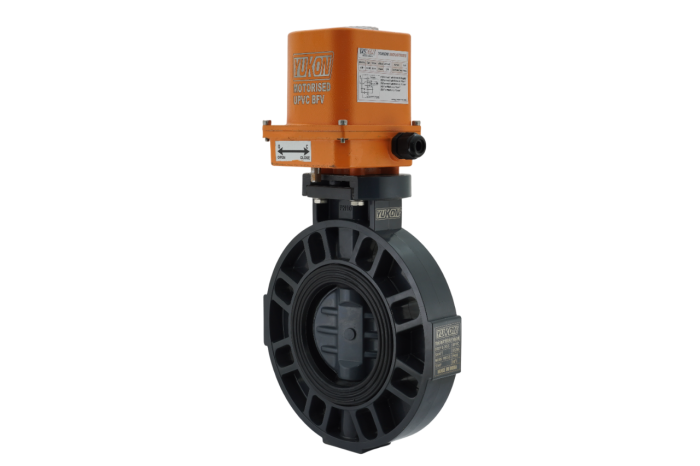
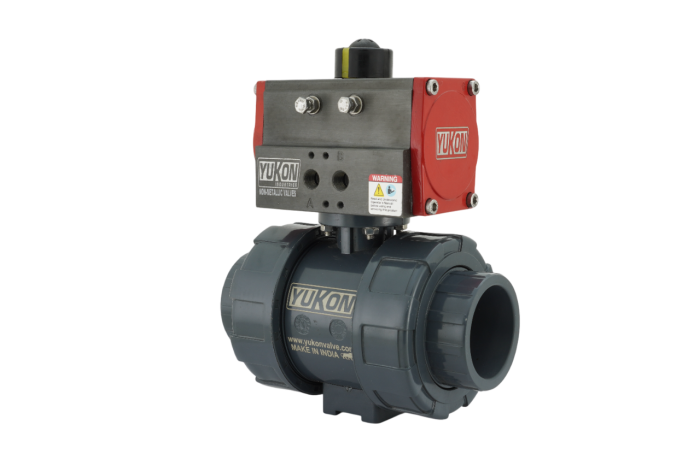
Temperature & Pressure Comparison Table
UPVC → Low temp, low cost, great for water
CPVC → Medium temp, ideal for hot water
PP/PPH → Medium temp + chemical resistance
PVDF → High temp + extreme chemical resistance
If your application handles strong acids, PP works well. But if purity matters or chemicals are too aggressive, PVDF becomes the safe choice.
Industry Applications for Each Material
Here’s a quick snapshot of real applications engineers already trust:
Industry | Best Material | Why |
Water Treatment | UPVC, PP | Clean water + chemical dosing |
Pharma | PVDF | Purity and zero contamination |
Chemicals | PP, PVDF | Acid/alkali handling |
Irrigation | UPVC | Cost-effective + stable |
HVAC | CPVC | Hot/cold temperature compatibility |
Desalination | UPVC, PVDF | RO lines + harsh water chemistry |
For a detailed industry mapping with valve types, you can refer back to the Industry Applications section in the pillar guide.
How to Match Media Type With Polymer Material
Some engineers still guess which material works for their fluid. A simple rule helps:
- Cold water + Mild chemicals → UPVC
- Hot water + Higher temp → CPVC
- Acids/Alkalis + General chemicals → PP/PPH
- High purity + Strongest chemicals → PVDF
If you want a more complete selection process, the How to Select the Right Non-Metallic Valve section in the main pillar guide offers a step-by-step method.
Common Mistakes When Choosing Valve Materials
Engineers often make the same mistakes:
- They don’t cross-check the chemical compatibility chart.
- They pick UPVC for medium-temperature lines “to save cost.”
- They underestimate abrasion in dosing lines.
- They choose PP when the media actually demands PVDF.
These mistakes lead to swelling, cracking, leakage, and poor seal performance.
Final Recommendation
Choosing between UPVC, CPVC, PP, and PVDF becomes easy when you understand your fluid, temperature range, and purity requirements. Each material has a sweet spot, and once you match them correctly, you minimize downtime and extend valve service life.
If you want a broader understanding of every non-metal valve category, automation options, and industry usage, we invite you to share your requirements with the reputed valve supplier.
If you’re evaluating UPVC, CPVC, PP, or PVDF valves for your plant, explore our Non-Metallic Valve Product Categories. We help you choose the right material, the right valve type, and the right actuation setup based on your exact application.
Connect with our technical experts to get started.