Industrial systems rely on precise flow control to maintain safety, efficiency, and operational reliability. While valves regulate the movement of liquids and gases within pipelines, valve actuators play a crucial role in automating and controlling valve operations.
In modern industrial environments such as oil & gas plants, chemical processing facilities, water treatment plants, and marine systems, manual valve operation is often insufficient. Actuators provide the force required to open, close, or modulate valves remotely or automatically, improving operational efficiency and process control.
Understanding the types of valve actuators, their working principles, and how to select the right one is essential for engineers, procurement managers, and plant operators responsible for maintaining reliable industrial systems.
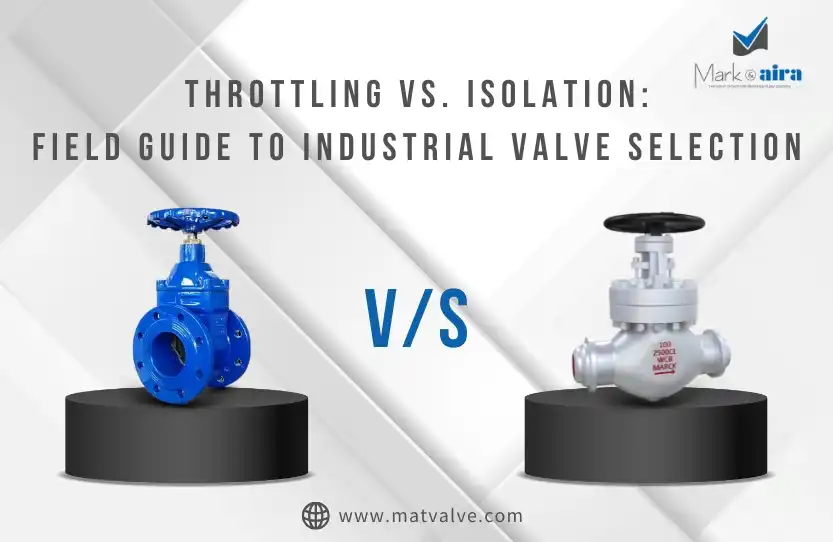
When selecting an actuator, engineers must also consider the industrial valve selection process, including pressure rating, media compatibility, and operating conditions.
Valve actuators are devices used to automate the opening and closing of industrial valves. The most common types of valve actuators include pneumatic actuators, electric actuators, and hydraulic actuators. These actuators convert energy such as compressed air, electricity, or hydraulic pressure into mechanical motion to control fluid flow in pipelines. Selecting the right actuator depends on valve type, torque requirements, environmental conditions, and automation needs. Valve actuators are widely used in industries such as oil and gas, water treatment, marine systems, and chemical processing.
What Are Valve Actuators?
A valve actuator is a mechanical device used to operate a valve automatically or remotely. Instead of manually turning a handwheel or lever, the actuator converts energy—such as air pressure, electricity, or hydraulic pressure—into mechanical motion that moves the valve stem.
Valve actuators are commonly used in automated process systems where manual operation would be inefficient or unsafe.
Key functions of valve actuators include:
- Opening and closing valves
- Controlling fluid flow within pipelines
- Enabling remote valve operation
- Improving process automation and safety
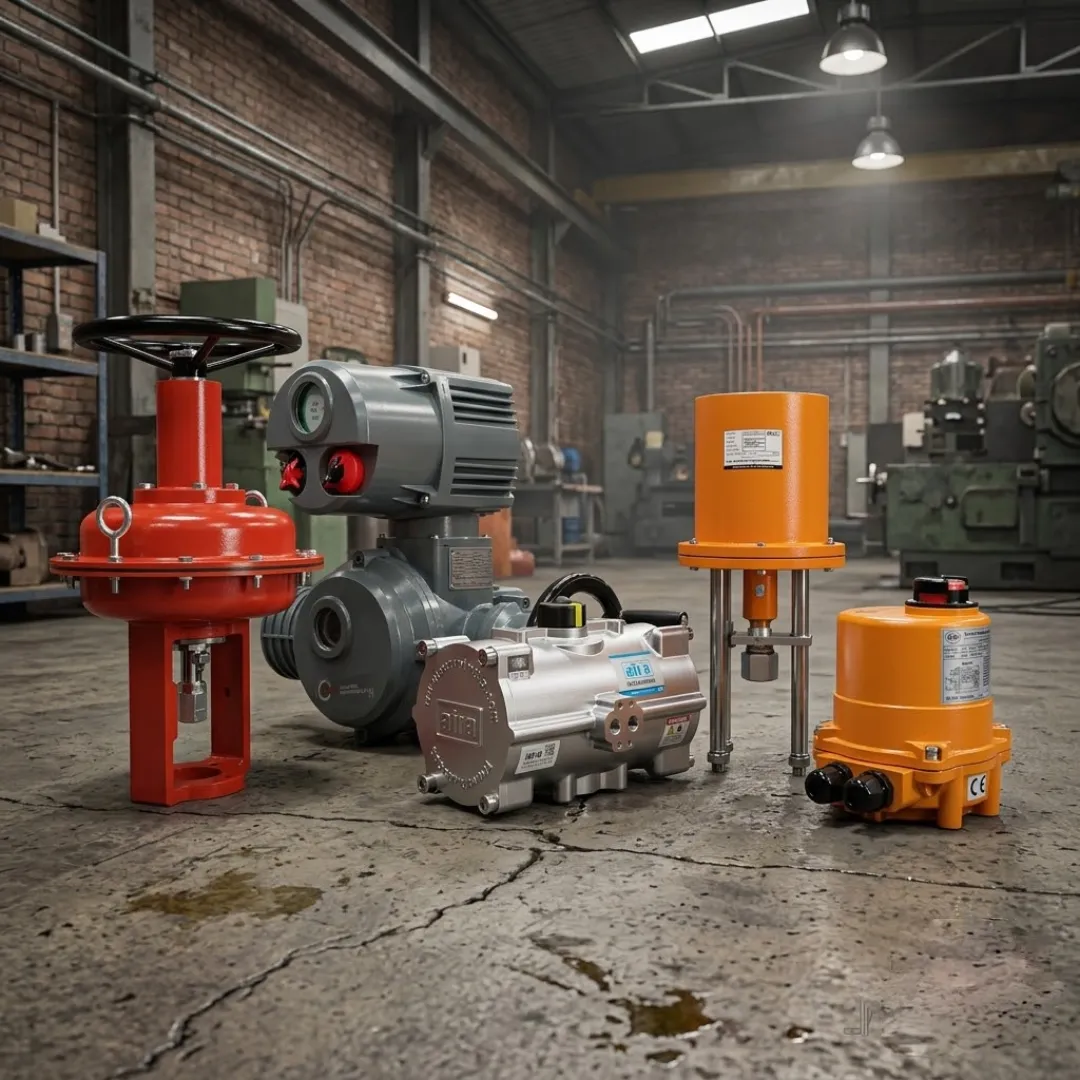
Actuators are typically installed on valves such as ball valves, butterfly valves, gate valves, and control valves in industrial applications.
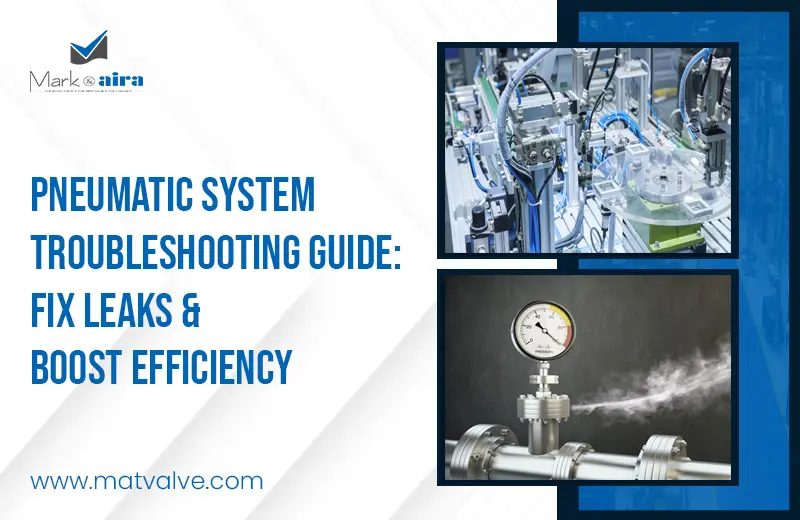
Pneumatic actuators are widely used in industrial plants. Proper maintenance and troubleshooting of pneumatic systems ensures reliable actuator performance.
Understanding Valve Actuators in Industrial Systems
In large industrial facilities, thousands of valves may be installed across pipelines and process equipment. Manual operation of these valves is often impractical, especially when valves are located in difficult-to-access or hazardous environments.
Valve actuators allow operators to control valve movement from a centralized control room or through automated control systems.
Automation offers several benefits:
✔ Improved operational efficiency
✔ Reduced manual labor
✔ Faster response to process changes
✔ Enhanced plant safety
✔ Integration with industrial control systems
As industries move toward digitalization and smart plant infrastructure, valve actuators have become an essential component of modern flow control systems.
Valve Actuator Working Principle
The valve actuator’s working principle is based on converting energy into mechanical motion that moves the valve stem.
The actuator receives an input signal or power source—such as compressed air, electricity, or hydraulic pressure—which generates mechanical force. This force is transmitted to the valve stem or shaft, causing the valve to open, close, or regulate flow.
The motion produced by actuators can be classified into two main types:
Quarter-turn motion (90° ↺)
Used for valves like ball valves and butterfly valves where the valve rotates 90 degrees to open or close.
Linear motion (↑↓)
Used for valves such as gate valves and globe valves where the valve stem moves up and down to control flow.
The choice of actuator depends on the valve design, torque requirements, and the operating environment.
Types of Valve Actuators
Industrial valve actuators are generally categorized into three main types based on their power source.
1. Pneumatic Valve Actuators
Pneumatic actuators use compressed air to generate mechanical motion. Air pressure moves a piston or diaphragm inside the actuator, which then rotates or lifts the valve stem.
These actuators are widely used in industrial plants due to their simplicity and reliability.
Advantages of Pneumatic Actuators
- Fast response time
- High reliability in harsh environments
- Explosion-safe operation
- Lower maintenance requirements
Common Applications
- Oil and gas processing plants
- Chemical manufacturing
- Water treatment facilities
- Industrial automation systems
Because they operate using compressed air rather than electricity, pneumatic actuators are often preferred in hazardous environments where sparks must be avoided.
2. Electric Valve Actuators
Electric actuators operate using an electric motor to move the valve. The motor converts electrical energy into mechanical torque that drives the valve stem.
These actuators are widely used in automated control systems where precise positioning is required.
Advantages of Electric Actuators
- Precise valve positioning
- Easy integration with control systems
- Suitable for remote operation
- Ideal for modulating control applications
Common Applications
- HVAC systems
- Water distribution networks
- Power plants
- Industrial automation systems
Electric actuators are particularly useful when accurate control of valve position is necessary for regulating flow or pressure.
3. Hydraulic Valve Actuators
Hydraulic actuators use pressurized hydraulic fluid to generate powerful mechanical force. Because hydraulic systems can generate extremely high torque, these actuators are often used for heavy-duty industrial applications
Advantages of Hydraulic Actuators
- Very high force output
- Reliable operation under extreme conditions
- Suitable for large industrial valves
Common Applications
- Offshore oil platforms
- Pipeline systems
- Heavy industrial processing plants
Hydraulic actuators are commonly selected when valves require significant torque to operate.
Valve Actuator Selection Guide
Selecting the right actuator is essential for ensuring safe and efficient valve operation. Engineers typically consider several technical factors when choosing an actuator.
- Valve Type
Different valves require different types of actuator motion. For example:
Ball valves require quarter-turn actuators
Gate valves require linear actuators - Torque Requirements
The actuator must generate enough torque or force to operate the valve under operating pressure. - Operating Environment
Environmental conditions such as temperature, humidity, corrosive chemicals, or explosive atmospheres can influence actuator selection. - Power Source Availability
The available power source within the plant—air supply, electrical systems, or hydraulic infrastructure—also determines actuator choice. - Automation Requirements
In modern industrial plants, actuators often integrate with control systems such as SCADA or distributed control systems to enable remote monitoring and automation.
Choosing the correct actuator improves reliability, reduces downtime, and ensures optimal performance of the valve system.
Automation Engineer
Industrial Applications of Valve Actuators
Valve actuators are widely used across many industries that require precise control of fluids and gases.
Oil and Gas Industry
Actuators control pipeline flow, pressure regulation, and emergency shutdown systems.
Water Treatment Plants
Automated valves regulate water flow during filtration and distribution processes
Chemical Processing
Actuators help maintain safe and accurate flow control in chemical production systems.
Marine and Offshore Systems
Valve automation improves reliability in marine pipelines and offshore energy facilities.
Across these industries, actuators support efficient operations and enhance process safety.
Electric actuators are commonly used in motorised valve systems where precise control and automation are required.
Future Trends in Valve Automation
Industrial automation continues to evolve as industries adopt smarter and more efficient technologies. Modern actuator systems are increasingly integrated with digital monitoring and control platforms.
Key trends include:
- Smart valve actuators with sensors
- Remote monitoring and diagnostics
- Integration with industrial IoT systems
- Predictive maintenance technologies
These advancements allow operators to monitor valve performance in real time and prevent failures before they occur.
Do you require expert technician help for actuator mapping? Contact us, and our experts will help you obtain the best actuator that fits your requirements.
Frequently Asked Questions
What is a valve actuator?
A valve actuator is a mechanical device that automatically operates a valve using energy from air pressure, electricity, or hydraulic pressure.
What are the main types of valve actuators?
The three main types of valve actuators are pneumatic actuators, electric actuators, and hydraulic actuators.
Which actuator is most commonly used in industrial plants?
Pneumatic actuators are widely used in industrial plants because they are reliable, fast, and safe for hazardous environments.
What is the difference between linear and rotary actuators?
Linear actuators move the valve stem in an up-and-down motion, while rotary actuators rotate the valve shaft, typically by 90 degrees.
How do engineers select the right valve actuator?
Engineers consider factors such as valve type, torque requirements, environmental conditions, available power sources, and automation needs.