
You know the sound. You walk past the mixing line, and you hear the pumps straining. The flow meter readings bounce around erratically. The operator at the end of the line looks frustrated.
It’s the resin. It’s a heavy pigment paste. It’s the nature of the beast in paint and ink manufacturing.
Moving water is easy. Moving high-viscosity fluids, media that behave more like a solid than a liquid, is an engineering nightmare. Manual valves used to be enough. An operator would walk over, crank the handle, and muscle the valve open. But that doesn’t work anymore. Production targets are too high. Quality control standards are too strict. You can’t rely on guesswork to mix exact color ratios.
You need automation.
But here is the catch. You cannot just slap a standard actuator on a standard valve and call it a day. Paint fights back. It dries. It sticks. It clogs. To win this battle, you need a specific strategy for automation in high-viscosity handling. Let’s look at how you optimize flow control without shutting down your line every week for maintenance.
To win this battle, you need a specific strategy for automation in high-viscosity handling. Let’s look at how you optimize flow control without shutting down your line every week for maintenance.
The Challenge of Viscosity: Why Standard Actuators Fail
Let’s get technical for a moment. Paint and ink often behave as thixotropic fluids.
This means their viscosity changes based on stress. When you agitate the paint (shear it), it flows nicely. But when you let it sit? It thickens. It sets up. It becomes a semi-solid plug inside your pipeline.
This creates a massive problem for automation: Breakout torque.
Imagine your production line stops for the weekend. The valve closes. The paint inside the line settles. Monday morning comes. The PLC sends a signal to the actuator: “Open.”
A standard actuator applies its rated torque. Nothing happens. The valve doesn’t budge because the “breakout torque” required to crack that static, sticky seal is now three times higher than the running torque.
The actuator stalls. Or worse, it snaps the valve stem.
Standard fluid dynamics in paint dictate that you need power in reserve. You aren’t just fighting friction; you are fighting adhesion. Abrasive pigment handling adds another layer of complexity. Titanium dioxide and metallic flakes act like sandpaper. They eat soft seals for breakfast 😀 .
If you stick with standard automation specs, you will face constant downtime. You need to engineer for the worst-case viscosity scenario.
Selecting the Right Automated Valves for Viscous Media
So, what hardware do you actually need? You have two main choices for the strength behind the valve: Pneumatic or Electric.
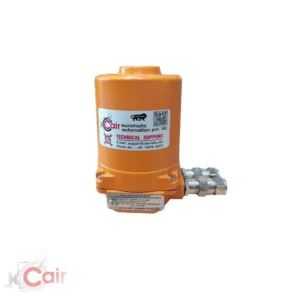
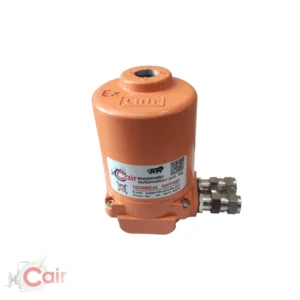
Pneumatic Actuators: Speed and Safety
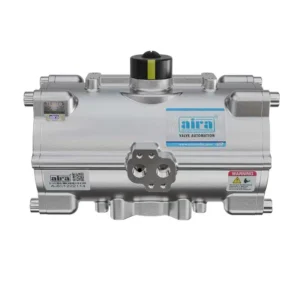
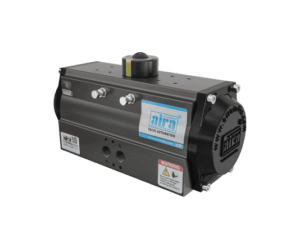
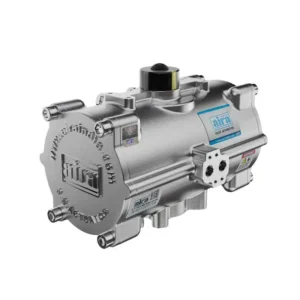
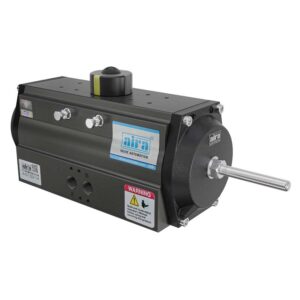
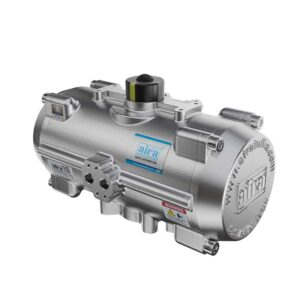
In the paint world, pneumatic actuators for paint usually win. They offer a simple, robust design.
First, consider speed. Pneumatic rack and pinion actuators snap open and shut instantly. When you deal with fast-drying media, you don’t want a valve that takes 30 seconds to close. You want immediate action to cut off flow and prevent drips.
Second, consider the “spring return” safety feature. If your air supply fails, or the power cuts out, a spring-return actuator forces the valve into a safe position (usually closed). This is fail-safe automation. It prevents you from dumping 500 gallons of expensive solvent on the floor during a blackout.
We typically recommend oversizing these actuators. If the valve requires 50Nm of torque, buy an actuator that delivers 70Nm or 80Nm. That extra muscle handles the Monday morning “stickiness” we talked about earlier.
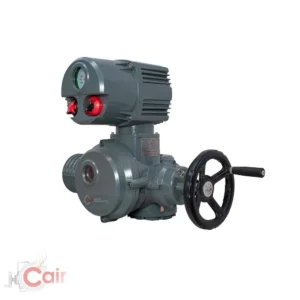
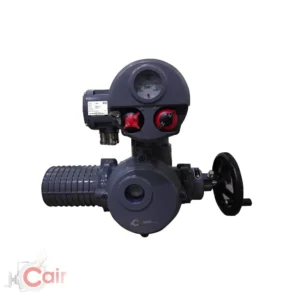
Electric Actuators: Precision and Control
Sometimes, “Open” and “Closed” aren’t enough. You need to control the flow rate. You need to throttle the valve to 25% open, then 50%, then 100%.
This is where electric actuators shine.
Modern electric units integrate seamlessly with your control loops. They use automated dosing systems to manage ingredients precisely. If you are mixing a custom color batch, an electric actuator can modulate the resin flow with incredible accuracy.
They provide constant torque control. A smart electric actuator knows if the valve is sticking. It can ramp up power to push through a blockage, or stop and alert the system before breaking the stem.
Readers also read this ↓
Valve Body Design: Ball vs. Butterfly for Thick Fluids
The actuator is the muscle, but the valve body is the battlefield. The design of the valve determines if paint flows smoothly or gets trapped and hardens.
The Case for Industrial Ball Valves
For most pigment and solvent lines, industrial ball valves are your workhorse. But you must choose the right internal design.
Standard ball valves have a dead space behind the ball. Liquid gets in there. When the valve cycles, that trapped liquid has nowhere to go. In a water line, it’s fine. In a paint line? That trapped paint dries. It turns into a rock. The next time you turn the valve, that hard chunk destroys your seals.
You need a Full Port Ball Valve.
Manufacturers fill the void around the ball with PTFE (Teflon). There is literally nowhere for the paint to hide. The fluid path remains smooth. This creates clog-resistant designs that last significantly longer.
Also, always specify full port flow. You want the hole in the ball to match the pipe size exactly. Any restriction increases pressure and creates turbulence, which ruins the consistency of high-viscosity fluids.
When to Use Sanitary Butterfly Valves
Sometimes a ball valve is too heavy or expensive, especially on large 4-inch or 6-inch lines. Here, sanitary butterfly valves offer a strong alternative.
These valves use a slim disc. They don’t trap much in the media. Their biggest advantage is maintenance. You can take a sanitary butterfly valve apart in minutes.
Operators love them for color changeover efficiency. If you switch from black paint to white paint, you need to clean every micron of the old color out. A sanitary valve with a clamp-end connection drops right out of the line for deep cleaning. They bridge the gap between industrial durability and hygienic speed.
Critical Compliance: ATEX and Silicone-Free Standards
You cannot just focus on mechanics. You must focus on the environment. A paint plant is a hazardous zone.
Solvents like Toluene, Xylene, and Acetone release fumes. These are Volatile Organic Compounds (VOCs). One spark creates a disaster.
Your automation components must carry ATEX-certified automated valves ratings. This certifies that the equipment will not generate a spark in an explosive atmosphere. This applies to the actuator, the limit switch box, and the solenoid valve. Never compromise here.
Then, there is the quality killer: Silicone.
In the automotive sector, silicone is the enemy. Even a microscopic trace of silicone oil can cause “cratering” or “fish-eyes” in the final paint job. It ruins the finish. It costs thousands in rework.
You need to specify LABS-free certification (also known as PWIS-free). This ensures the valve manufacturer assembled the unit in a clean room. It guarantees the grease inside the actuator contains zero silicone.
Using silicone-free valve automation isn’t just a feature; it’s an insurance policy against product rejection.
Optimizing for Maintenance: The “Pigging” Ready System
Sustainability is a huge trend right now. You want to waste less paint.
When you finish a batch, the pipe is still full of product. If you wash it out with solvent, you lose that product and create hazardous waste.
Smart plants use pigging systems. You shoot a flexible plug (the “pig”) through the pipe to push the leftover paint into the filling machine. It recovers the product and cleans the pipe simultaneously.
Your valves must support this. A standard butterfly valve will block the pig. A reduced-port ball valve will trap it. You need maintenance-friendly valves—typically full-bore ball valves that open completely to let the pig pass through unrestricted.
This ties directly into CIP compatible valves (Clean-in-Place). Automation allows you to pulse the valves during the cleaning cycle, ensuring solvents reach every corner of the seal surface. This dramatically reduces the amount of solvent you need to get the line clean.
Future-Proofing: Smart Positioners and IoT
Where is the industry going in the next 6 to 12 months? It’s getting smarter.
We are moving away from “dumb” open/close signals. We are adopting smart valve positioners.
Imagine a valve that tells you it’s getting tired.
New IIoT in paint industry technology monitors the valve’s performance curve. If the valve starts requiring 10% more torque to close than it did last month, the system flags it. It tells you: “Maintenance required on Line 4.”
You fix it before it seizes. That is predictive maintenance in manufacturing. It stops unexpected downtime dead in its tracks.
Conclusion & Next Steps
Handling high-viscosity fluids doesn’t have to be a daily struggle. It just requires the right approach.
You need to respect the physics of the fluid. You need high-torque, pneumatic actuators or precise electric controls. You need cavity-free seats to stop clogging. And you absolutely must demand ATEX and LABS-free certifications to keep your plant safe and your product pure.
When you get this right, your batch consistency goes up. Your waste goes down. And your maintenance team stops chasing emergency repairs.
Struggling with valves that seize up in high-viscosity applications? Request a Technical Audit with our engineering team today to find the perfect actuator torque and valve combination for your specific media.