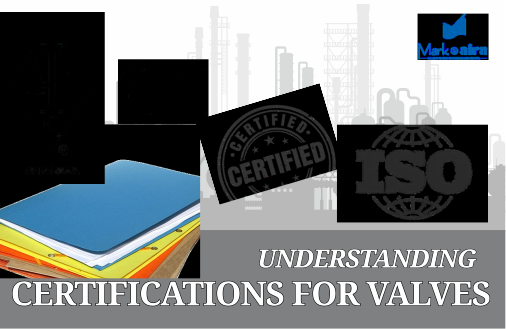
If you’ve ever been responsible for sourcing industrial valves in UAE for a plant or project, you already know the pressure that comes with it. One wrong choice can lead to safety risks, delays in approvals, or even expensive shutdowns. Certifications are what help prevent those problems. They aren’t just stamps on a piece of paper—they are proof that the valve has been designed, built, and tested to do its job.
In the UAE, the certifications you’ll hear most often are API 6D, ISO, and CE. Each of them addresses a different part of compliance and quality. Understanding what they mean will give you the confidence to choose the right valves—whether you’re looking for a valve supplier in Dubai or making sure your supplier meets all valve compliance requirements in the UAE.
API 6D: Built for High-Stakes Projects
When it comes to oil, gas, and petrochemical projects, API 6D is the certification you can’t ignore. It’s issued by the American Petroleum Institute and lays out strict requirements for valve design, the materials used, and the way the valve is tested and inspected.
An API 6D certified valve has essentially been engineered for the most demanding pipeline applications. It’s why so many project specifications make API 6D a non-negotiable requirement. Asking for an API certified valve in Dubai isn’t just about meeting a standard—it’s about making sure your project avoids downtime, safety incidents, and costly replacements.
ISO: The Everyday Quality Check
While API focuses on pipelines and energy projects, ISO certifications are about the overall way a manufacturer operates. ISO 9001, for example, ensures a company follows strict quality management practices. ISO 14001 looks at how responsibly a manufacturer handles its environmental impact. ISO 15848 zeroes in on controlling fugitive emissions, which is becoming increasingly important for both safety and sustainability.
When you source ISO certified valves in the UAE, particularly from an ISO 9001 valve manufacturer in Dubai, you’re choosing consistency. It means the manufacturer doesn’t just make one good product; they have systems in place to deliver that level of quality every single time.
CE: Your Passport to Europe
The CE mark is Europe’s seal of approval. For valves, it signals compliance with European safety, health, and environmental standards. While it may not be mandatory in every sector, it’s especially valuable in HVAC, pharmaceuticals, and any project tied to exports into European markets.
For buyers in the UAE, choosing CE marked valves in Dubai brings peace of mind. Not only are you assured of a safe and tested product, but you’re also ensuring your equipment will be accepted in European-regulated projects. In other words, CE compliance is your passport to working smoothly with European valve standards.
How to Double-Check Certifications
It’s important not to take every “certified” label at face value. Before committing to a supplier, always ask for original certificates and review the documentation carefully. Look closely at the product codes and confirm them with the certifying authority. A credible supplier should have certifications clearly displayed on their website, in their catalogs, or available on request. If they also rely on third-party testing, that’s a strong sign they take compliance seriously.
These steps may feel small, but they go a long way in protecting your project. They make the difference between a smooth procurement process and one filled with costly surprises.
Final Thoughts
Certifications aren’t just formalities. They protect your projects from delays, your plant from safety risks, and your investments from failure. If you’re sourcing valves in the UAE, don’t stop at price and lead time—make certifications part of the conversation.
Whether it’s API 6D for high-pressure pipelines, ISO for proven quality management, or CE for export readiness, certified valves give you confidence that your equipment will perform.
Are you still looking for reliable industrial certified valves in Dubai? Contact us today, we will allow you the best quote with data sheets. It’s a simple step that helps you make smarter, safer, and more compliant procurement decisions.